

1909‑S VDB Lincoln Cent: Why It’s a Key Date
Posted by Andrew Adamo - A certified ANA Professional Numismatist, Active member of ICTA, contributor to CoinWeek, Numismatic News, NGC and ANA on May 20th 2026
1909‑S VDB Lincoln Cent: Why It's a Key Date
The 1909‑S VDB Lincoln Cent is one of the most sought-after key dates in U.S. numismatics, valued from several hundred dollars in lower circulated grades to over $100,000 for certified mint state examples. The highest auction record for a pristine specimen has reached well into six figures, reflecting strong collector demand and limited availability.
Overview of the 1909‑S VDB Lincoln Cent
The 1909‑S VDB Lincoln Cent represents a pivotal moment in American coinage history. Struck during the first year of the Lincoln Cent series, this coin carries the initials of its designer, Victor David Brenner, prominently displayed on the reverse. The San Francisco Mint produced only a small quantity before officials removed the initials due to public criticism about their size and placement.
Collectors recognize this coin as one of the most important issues in the entire Lincoln Cent series. Its combination of low mintage, historical significance, and aesthetic appeal has made it a cornerstone piece for anyone assembling a complete set. Even beginning collectors often know this date by reputation, and experienced numismatists consider it essential for serious type sets and date collections.
The coin's status extends beyond simple rarity. It marks the introduction of a beloved design that would span more than a century. It also represents a moment of controversy and change in United States Mint policy regarding designer recognition. These factors elevate the 1909‑S VDB Lincoln Cent from a scarce coin to a cultural artifact within American numismatics.
Historical Background of the Lincoln Cent Series
The Lincoln Cent replaced the Indian Head Cent in 1909, commemorating the centennial of Abraham Lincoln's birth. President Theodore Roosevelt had initiated efforts to beautify American coinage, leading to the selection of sculptor Victor David Brenner to design the new cent. Brenner's portrait of Lincoln became the first circulating U.S. coin to feature a historical figure rather than an allegorical representation of Liberty.
Brenner placed his initials, V.D.B., at the bottom reverse of the coin, positioned prominently between the wheat stalks. Public reaction was mixed, with some critics claiming the initials were too large and amounted to free advertising for the designer. The controversy reached such intensity that Treasury officials ordered the initials removed after only a brief production period.
The Philadelphia Mint had already struck millions of cents with the initials by the time the order arrived. However, the San Francisco facility had produced far fewer examples. This timing created a natural rarity that collectors immediately recognized. Within years of issue, the 1909‑S VDB Lincoln Cent had already achieved premium status in the marketplace.
The initials would eventually return to the Lincoln Cent in 1918, but in a much smaller size and placed on the obverse near Lincoln's shoulder. This change rendered the original 1909 VDB issues distinctive and historically significant. The San Francisco version, with its limited production, became the most desirable of all VDB cents.
Why Collectors Prioritize the 1909‑S VDB Lincoln Cent
Collector demand for the 1909‑S VDB Lincoln Cent stems from multiple factors that extend beyond simple scarcity. The coin occupies a unique position in American numismatic history as both an inaugural issue and a briefly produced variety. This combination creates strong appeal across different collecting philosophies.
First-year-of-issue coins typically attract significant attention from collectors who appreciate historical turning points. The 1909 Lincoln Cent marked a departure from previous design traditions and introduced a modern approach to commemorating American figures on circulating coinage. Collectors seeking to represent important moments in U.S. Mint history often prioritize this date.
The controversy surrounding the designer's initials adds a layer of human interest that many collectors find compelling. The public debate, the Mint's response, and the subsequent removal of the initials created a story that has endured for more than a century. Numismatists often appreciate coins with interesting backstories, and few cents possess a narrative as well-documented and widely known.
Rarity alone does not guarantee collector interest, but when combined with aesthetic quality and historical importance, it becomes a powerful driver of demand. The 1909‑S VDB Lincoln Cent benefits from all three attributes. The design itself is considered attractive, the historical context is rich, and the limited mintage ensures that examples will always remain scarce relative to collector interest.
For collectors assembling complete Lincoln Cent sets, this coin represents one of the most challenging acquisitions. Its key date status means that obtaining an example often marks a significant milestone in building a collection. This psychological factor reinforces demand and contributes to the coin's enduring prominence in the marketplace.
Design Elements and Identifying Features
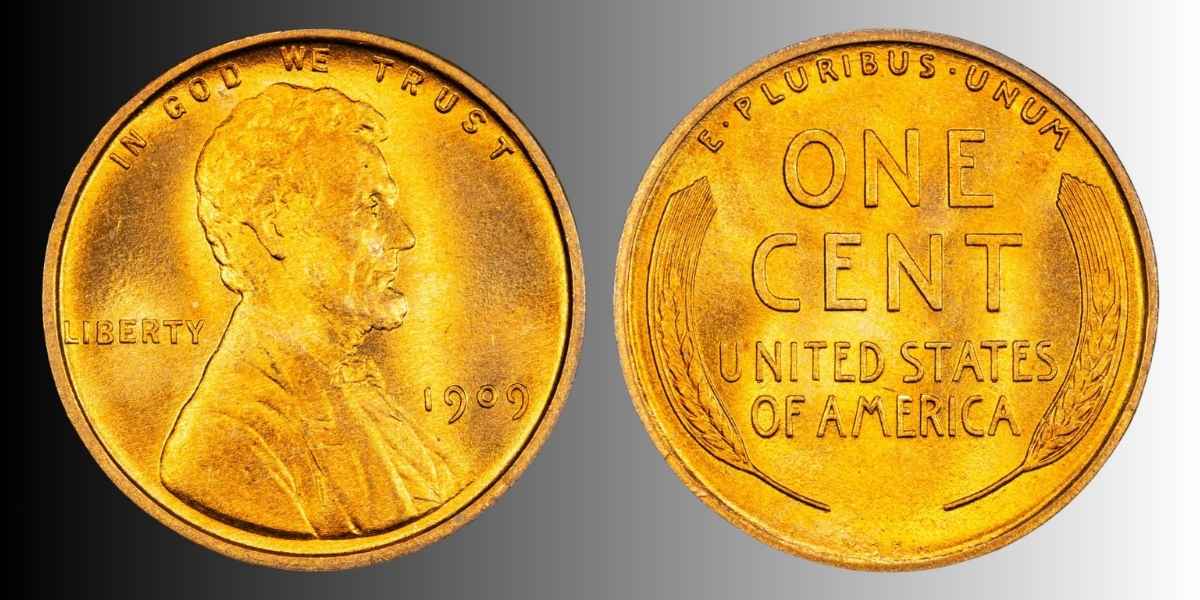
The obverse of the 1909‑S VDB Lincoln Cent features Victor David Brenner's right-facing portrait of Abraham Lincoln. The design captures Lincoln in profile, showing fine detail in his hair, beard, and facial features. The word LIBERTY appears along the left side of the coin, while IN GOD WE TRUST is positioned above Lincoln's head. The date 1909 sits below the portrait.
The reverse displays two wheat stalks framing the central inscription. ONE CENT appears in the middle, with UNITED STATES OF AMERICA arching above. The Latin phrase E PLURIBUS UNUM is positioned at the top of the coin. Most notably for identification purposes, the designer's initials V.D.B. appear at the bottom of the reverse, between the wheat stalks.
The San Francisco Mint mark S is located on the obverse, below the date. This small letter distinguishes San Francisco strikes from those produced at the Philadelphia Mint. Collectors examining potential purchases should verify that both the S mint mark and the V.D.B. initials are clearly visible and properly positioned. Counterfeits exist, and authentication by reputable third-party grading services provides important protection.
The coin's composition consists of 95 percent copper and 5 percent tin and zinc, giving it the characteristic bronze color familiar to collectors of early Lincoln Cents. The diameter measures 19 millimeters, and the weight is 3.11 grams. These specifications match other Lincoln Cents of the era and help confirm authenticity when combined with other diagnostic features.
Strike quality varies among surviving examples. Some coins display sharp details throughout, while others show weakness in certain areas, particularly in Lincoln's hair and beard or in the wheat stalks on the reverse. Collectors evaluating specific coins should examine these elements carefully, as strike quality influences both grade and desirability.
Mintage Numbers and Production Context
The San Francisco Mint produced 484,000 examples of the 1909‑S VDB Lincoln Cent before officials ordered the removal of the designer's initials. This mintage figure represents a tiny fraction of the total cent production for 1909 and stands in stark contrast to the tens of millions of cents typically struck in a given year.
Production occurred during a brief window in August 1909. The Philadelphia Mint had begun striking VDB cents in June, and San Francisco followed shortly thereafter. By the time the controversy reached its peak and Treasury officials responded, Philadelphia had produced more than 27 million VDB cents. San Francisco's much lower output created an immediate imbalance in availability.
Contemporary collectors recognized the coin's scarcity almost immediately. Even in 1909, newspapers reported that the San Francisco VDB cents were commanding premiums. This early awareness meant that some examples were preserved in better condition than typical circulation coins, though many still entered general use and show wear from handling.
The limited mintage also means that the absolute number of surviving examples remains constrained. While exact survival rates are difficult to determine, attrition from circulation, loss, and damage has reduced the population significantly over more than a century. High-grade examples are especially scarce, as most coins that escaped circulation did so by chance rather than through deliberate preservation.
Rarity Assessment and Current Availability
Numismatists classify the 1909‑S VDB Lincoln Cent as a key date within the series, meaning it represents one of the most difficult regular-issue coins to obtain. While not impossibly rare, it remains significantly scarcer than most other Lincoln Cent dates. Collectors should expect to pay substantial premiums compared to common dates, even for well-circulated examples.
Lower-grade circulated specimens in Good through Fine condition appear with some regularity in the marketplace. These coins show considerable wear but retain clear dates, mint marks, and visible V.D.B. initials. Collectors working within limited budgets often pursue these grades as an affordable entry point into owning this important date.
Very Fine through Extremely Fine examples offer more detail and eye appeal but command significantly higher prices. These intermediate grades represent coins that saw limited circulation or were preserved relatively early in their lives. They show wear on the high points but retain much of their original design detail and some remaining luster in protected areas.
Mint state examples are considerably scarcer and represent a major acquisition for most collectors. Uncirculated 1909‑S VDB cents display full original luster and show no wear from circulation. However, they may exhibit contact marks, bag marks, or other surface disturbances from the minting and storage process. Higher mint state grades with superior eye appeal and minimal marks are particularly challenging to locate.
Third-party certification has helped collectors identify genuine examples and assess condition accurately. Major grading services have certified thousands of 1909‑S VDB cents, but demand continues to exceed available supply, especially in higher grades. Population reports from these services provide useful context about relative availability across different grade levels.
Grading Considerations and Condition Factors
Evaluating the condition of a 1909‑S VDB Lincoln Cent requires attention to several key areas that show wear first or reveal the quality of the original strike. The high points of Lincoln's portrait include his cheekbone, jaw, and the hair above his ear. These areas lose detail first in circulation and should show sharp definition in higher grades.
The wheat stalks on the reverse also serve as important diagnostic points. Well-struck coins display distinct lines within the wheat kernels, while weakly struck examples may show softness even in mint state condition. Collectors should distinguish between wear and strike weakness, as these factors affect grade assignments and value differently.
Surface preservation plays a crucial role in determining both technical grade and overall appeal.