

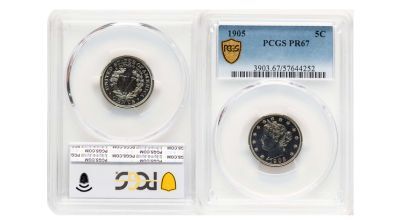
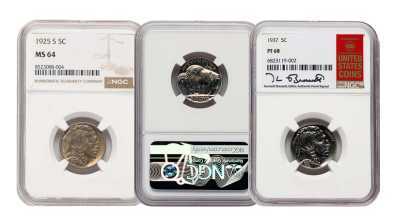

Certified Nickels – Professionally Graded Rare U.S. Nickels for Collectors
Certified nickels hold a special place in the world of numismatics, offering collectors a blend of historical significance, enduring value, and trusted authenticity. This category features a wide range of certified U.S. nickels, including Shield Nickels, Liberty Head Nickels, Buffalo Nickels, and Jefferson Nickels, all professionally graded by the most respected third-party services in the industry, such as CACG, PCGS (Professional Coin Grading Service) and NGC (Numismatic Guaranty Company). These coins have undergone rigorous evaluation to ensure accuracy in grading, preservation quality, and legitimacy—making them exceptional choices for both beginning collectors and advanced numismatists seeking investment-grade material.
Rare U.S. Nickels History
The history of the American nickel spans more than 150 years, marked by iconic designs and key dates that remain highly desirable today. Certified examples provide collectors with the confidence that each piece has been authenticated, encapsulated, and assigned a precise numerical grade. This helps protect your collection while also offering a standardized method of comparison when building or upgrading your rare coin portfolio. Certified nickels are especially appealing because the grading process eliminates guesswork, ensuring that buyers can trust the coin’s condition, originality, and value.
Explore Certified Shield, Liberty, Buffalo & Jefferson Nickels
Within this category, you’ll find certified examples from every major nickel series. Shield Nickels, produced from 1866 to 1883, were the first five-cent coins made of nickel and are prized for their early-American charm and Civil War–era origins. Liberty Head Nickels, minted from 1883 to 1913, include popular varieties like the “No CENTS” type and the key-date 1885 and 1886 issues, which remain highly sought after in certified holders due to their rarity. Buffalo Nickels, struck from 1913 to 1938, are among the most iconic U.S. coins ever produced. Collectors appreciate their distinctly American imagery and numerous collectible varieties, including the 1913 Type 1 and Type 2 issues, well-struck dates from the teens and twenties, and condition rarities in Mint State. Finally, Jefferson Nickels, minted from 1938 to the present, offer a wide range of certified options from early wartime silver compositions to modern high-grade examples that are surprisingly scarce in top condition.
Certified nickels are not only valued for their beauty and historical importance but are also considered one of the most accessible entry points into certified rare coin collecting. Their affordability compared to other U.S. denominations, paired with the security of third-party grading,makes them ideal for collectors building sets, searching for key dates, or investing in coins with long-term market demand. Whether you are searching for visually appealing toned nickels, superb gem Mint State examples, scarce varieties, or older circulated pieces with strong detail, certified nickels offer dependable quality backed by the grading company’s guarantee.
Browse our expanding selection of PCGS- , CAC-, and NGC-certified nickels to find coins that match your collecting goals. Each listing provides detailed information, high-resolution images, and accurate grading data to help you make informed decisions. Whether you are adding to a registry set, completing a classic nickel collection, or purchasing certified coins, our inventory provides exceptional value, variety, and authenticity you can trust.
Certified Nickels FAQ
A certified nickel is a U.S. five-cent coin that has been authenticated, graded, and encapsulated (“slabbed”) by a professional third-party grading service such as Professional Coin Grading Service (PCGS) or Numismatic Guaranty Company (NGC). Certification provides assurance on authenticity, condition, and helps establish market value.
Certified nickels offer:
Verified authenticity and grade (reduces risk of counterfeits).
Standardized grading which makes comparisons easier and helps resale value.
Encapsulation for protection.
These factors make certified nickels especially attractive for serious collectors.
Typical series include:
Shield Nickels (1866-1883)
Liberty Head / “V” Nickels (1883-1913)
Buffalo Nickels (1913-1938)
Jefferson Nickels (1938-present)
These series cover major design changes in U.S. nickel coinage.
Grading is typically based on the 70-point numerical scale used by PCGS/NGC (e.g., MS60–MS70 for Mint State coins). The process evaluates strike, surface preservation, luster, and eye appeal. Having a higher grade often correlates with higher value.
Reliability depends on the reputation of the grading service (PCGS, NGC, etc.), the population reports for that grade/coin, and whether the coin has been reslabbed or crossed over. It’s wise to verify the certification number via the grading company’s online database.
Yes. Key-dates, low-mintage years, error varieties (e.g., 1913 Liberty, 1937-D “three-legged” Buffalo) tend to command significantly higher premiums. The certification helps verify these factors which drive value.
Coin condition is one of the main value drivers. For example, a Buffalo Nickel in MS65 will be far more valuable than the same date in circulated condition. Certification ensures the grade is documented, which in turn helps determine market value.
Yes. Services like PCGS accept submissions where you mail your coins, pay a grading fee and wait for processing.
However, market-buying already certified coins may be quicker and less hassle.
AU (About Uncirculated) means the coin shows very slight wear, typically on the highest points.
MS (Mint State) means the coin shows no wear (uncirculated) though it may have minor contact marks or bag marks.
A certified nickel graded MS60–70 is in uncirculated condition, which often drives higher interest.
It’s highly recommended. When dealing with rare dates or varieties, certification helps ensure the coin is genuine, graded properly, and not altered. This matters when buying, selling, or insuring the coin.
Certified nickels typically have higher resale value and greater liquidity because buyers trust the grade and authenticity. This is especially relevant for rare or high-grade coins.
Generally yes, classic issues (Shield, Liberty, Buffalo) are often more collectible and scarce in high grades, hence they may command higher premiums. Modern certified nickels can still be good values but may have less upside than ultra-rare older dates.
Not exactly. Certification guarantees authenticity and grade (by the grading service’s guarantee) but it does notguarantee future market value or investment performance. Value still depends on rarity, condition, demand, and market conditions.
Population reports (commonly published by grading services) show how many coins of a given date/mintmark have been graded at each grade level. Lower population numbers at a high grade generally indicate higher scarcity and potential value.
Yes. Third-party services or verification companies may add further endorsements (e.g., Full Steps on Jefferson Nickels) indicating superior quality within the grade. These designations can boost demand and value for certified nickels.