

Top 100 Pennies Worth Money
Posted by Andrew Adamo - A certified ANA Professional Numismatist, Active member of ICTA, contributor to CoinWeek, Numismatic News, NGC and ANA. on Mar 26th 2026
Top 100 Pennies Worth Money List – Valuable U.S. Pennies
This guide answers the question “What pennies are worth money?” by explaining the factors that make a penny valuable, outlining how to evaluate your own coins and presenting a comprehensive Top 100 pennies worth money list. Whether you are a seasoned numismatist or just checking change for treasures, this article will help you identify valuable pennies hiding in plain sight.
The most valuable U.S. pennies are those with rare dates, mint errors, and high grades. Coins like the 1943‑D bronze and 1943‑S bronze cents have sold for over $500,000, while the famous 1955 doubled‑die obverse brings even more! The top 100 pennies worth money list also features the 1909‑S VDB, 1914‑D, 1969‑S doubled‑die, and even modern rarities like the 2025 Omega‑privy gold cent. Collectors should check pennies for key dates, low mintage, errors, and condition to find hidden treasures.
Keep reading to discover top 100 pennies worth money in 2026 with Bullion Shark!
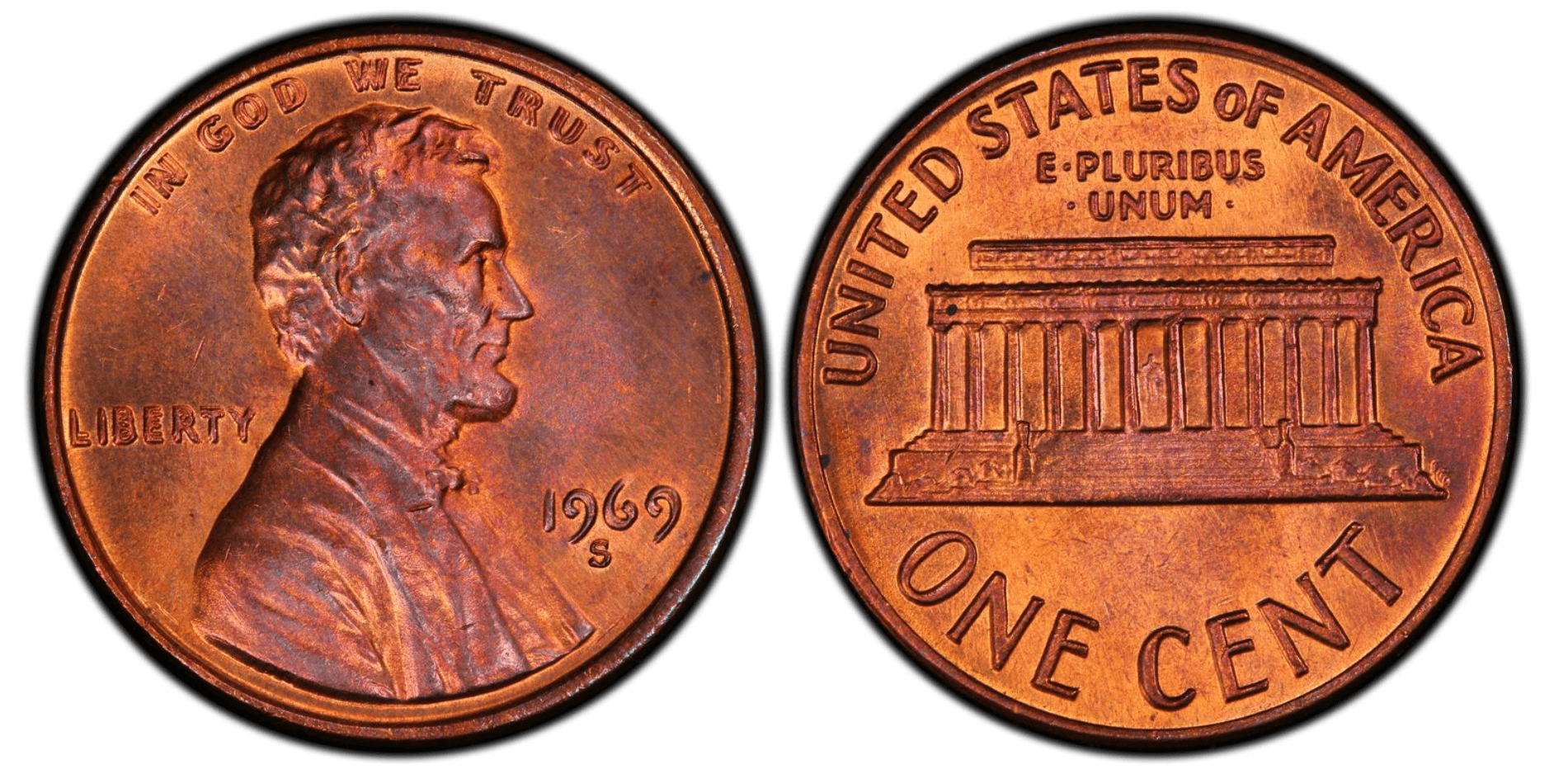
(1969-S Lincoln Penny–Doubled Die Obverse - $1.7 mln, not the exact coin pictured)
Image source: PCGS
Table of contents
- Why pennies are collectible
- What makes a penny valuable?
- How to tell if your penny is valuable
- Glossary of coin terms
- Top 100 pennies worth money list
- Highlights of the list
- Frequently asked questions
Why pennies are collectible
The end of circulation and a new era for pennies
In late 2025 the U.S. Treasury ended production of the penny for general circulation because it cost 3.69 cents to produce each cent. Circulating pennies remain legal tender, but 2025 became the last year for business‑strike pennies, with 2026 issues offered only in collector sets. This decision, along with rising bullion prices, has led collectors to re‑evaluate modern and historical cents, creating a surge of interest in key dates and error coins.
A brief history of the penny
The U.S. penny dates back to 1793 and has undergone numerous design and composition changes. Early cents were large copper coins featuring flowing hair Liberty; later designs included the Flying Eagle (1857–1858) and the Indian Head (1859–1909). In 1909 the penny celebrated the centennial of Abraham Lincoln’s birth, becoming the first U.S. coin to depict a president. Over the past century pennies have been struck in pure copper, bronze, steel and zinc. These transitions, along with rare mint errors, have produced numerous valuable varieties.
What makes a penny valuable?
Several factors combine to determine a penny’s value:
- Low mintage and rarity. Coins struck in small numbers or with few surviving examples command premiums. The 1877 Indian Head penny is highly coveted because far fewer examples survive compared with later issues.
- Mint marks and varieties. Rare branch‑mint issues (e.g., “S” for San Francisco or “D” for Denver) and special varieties such as doubled die obverses (DDO) or close AM reverses can increase values. For example, the 1969‑S doubled‑die obverse penny sold for well over a million dollars.
- Mint errors. Wrong‑metal strikes, off‑center coins and missing mint marks can turn common cents into rarities. The 1943 bronze penny (struck on wartime copper planchets by mistake) is one of the most valuable pennies ever sold.
- Condition and color. Coin grading services rate coins on a 70‑point scale; pennies graded Mint State (MS‑60 to MS‑70) sell for much more than circulated examples. Copper cents are also graded for color—red (RD), red‑brown (RB) and brown (BN); red coins fetch the highest premiums. Understanding these designations is essential for evaluating your penny collection.
- Historical significance. Pennies associated with important events, such as the 2025 Omega‑privy cent marking the last year of circulation, carry collectors’ premiums due to their historical context.
How to tell if your penny is valuable
Not sure whether your penny is worth more than face value? Follow these steps:
- Check the date and mint mark. Key dates include 1909‑S VDB, 1914‑D, 1922 “no D,” 1931‑S, 1955 doubled die, 1969‑S doubled die and modern varieties like the 1992 close AM. Low‑mintage years and branch‑mint coins are prime candidates for value.
- Look for errors. Examine both sides of the coin under magnification to spot doubling, off‑center strikes, missing letters or digits and unusual colors. Compare your coin to photos of known error varieties.
- Weigh it. Copper pennies struck before 1982 weigh 3.11 grams, while modern zinc cents weigh 2.5 grams. Wrong‑planchet errors (like 1943 bronze or 1944 steel cents) can be identified by weight and by using a magnet.
- Assess condition. Use a grading scale (Poor to Mint State) to rate your coin’s condition. Red, uncirculated coins with minimal marks bring the highest prices.
- Use a penny value checker or consult an expert. Many online databases and smartphone apps allow you to enter date, mint and condition to estimate value. For high‑value coins, seek professional grading and appraisal services.
Glossary of coin terms
Understanding coin‑collecting terminology helps you evaluate pennies accurately. Below are some common abbreviations and terms used in this guide (adapted from standard numismatic references):
- RD / RB / BN: Color designations for copper coins. RD (Red) indicates the original copper color and commands the highest premium. RB (Red‑Brown) shows partial oxidation, and BN (Brown) indicates full oxidation.
- DDO / DDR: Doubled Die Obverse/Reverse, a minting error where the design is impressed twice slightly offset, creating a shadowed or doubled look.
- DCAM / PR: Deep Cameo / Proof. Proof coins are specially minted for collectors using polished dies and often have mirror‑like backgrounds.
- FS: Fivaz–Stanton reference numbers used to catalog varieties.
- MS‑xx: Mint State grade. Numbers range from 60 (entry‑level uncirculated) to 70 (perfect).
Top 100 pennies worth money list
The table below ranks the most valuable pennies known as of 2026. Values are based on verified auction results from major auction houses. Prices reflect the highest recorded sale for each variety and will change over time; always check current market data before selling.
| Rank | Coin / Variety | Year(s) | Description (mint mark / variety) | Highest recorded price & auction | Notes |
|---|---|---|---|---|---|
| 1 | 1943‑D Bronze Wheat Cent | 1943 | Wrong‑metal error; bronze planchets accidentally used during steel‑cent production | $840,000 | Unique; most valuable Lincoln cent. |
| 2 | 1943‑S Bronze Wheat Cent | 1943 | Wrong‑metal error, only five known | $504,000 | Extremely rare. |
| 3 | 1944‑S Steel Wheat Cent | 1944 | Wrong‑planchet error after copper resumed | $408,000 | Very scarce; only a few exist. |
| 4 | 1943 Bronze Wheat Cent (Philadelphia) | 1943 | Bronze planchets left in press during steel production | $372,000 | One of a handful known. |
| 5 | 1958 Doubled‑Die Obverse (DDO) Wheat Cent (RD) | 1958 | Prominent doubling on “LIBERTY” and “IN GOD WE TRUST” | $336,000 | Fewer than 20 examples known. |
| 6 | 1909 V.D.B. Proof Wheat Cent (RB) | 1909 | Rare proof with designer’s initials on reverse | $258,500 | First year of the Lincoln cent. |
| 7 | 1944 Steel Wheat Cent (Philadelphia) | 1944 | Wrong‑planchet error; steel planchets left in press | $180,000 | Scarcer than 1943 bronze cents. |
| 8 | 1909‑S VDB Wheat Cent (RD) | 1909 | San Francisco issue with designer initials; low mintage | $168,000 | Classic key date. |
| 9 | 1914‑D Wheat Cent (RD) | 1914 | Denver issue; low mintage of 1.19 million | $158,625 | Key date; widely collected. |
| 10 | 1926‑S Wheat Cent (RD) | 1926 | San Francisco issue with low mintage | $149,500 | Scarce in high grade. |
| 11 | 1914 Proof Lincoln Cent (RD) | 1914 | Proof coin; extremely low mintage | $126,500 | One of the rarest proofs. |
| 12 | 1917 Doubled‑Die Obverse (DDO) Wheat Cent (RD) | 1917 | Prominent doubling; scarce in high grade | $120,000 | Early DDO variety. |
| 13 | 1944‑D Steel Wheat Cent | 1944 | Wrong‑planchet error at Denver | $115,000 | Very rare. |
| 14 | 1955 Doubled‑Die Obverse Wheat Cent (RD) | 1955 | Famous double‑image error, visible without magnification | $114,000 | Highly collected. |
| 15 | 1914‑S Wheat Cent (RD) | 1914 | San Francisco issue with low mintage | $105,800 | Scarce key date. |
| 16 | 1922 No‑D Wheat Cent (Strong Reverse) | 1922 | Denver accidentally omitted mint mark; strong reverse variety | $92,000 | Popular variety. |
| 17 | 1935 Wheat Cent (RD) | 1935 | Common date but extremely high grade (MS‑68) | $84,000 | Demonstrates premium for condition. |
| 18 | 1918 Wheat Cent (RD) | 1918 | High‑grade red example | $78,000 | Scarce in MS‑68. |
| 19 | 1925‑D Wheat Cent (RD) | 1925 | Denver issue; low mintage | $74,750 | Rare in high grades. |
| 20 | 1911‑D Wheat Cent (RD) | 1911 | Denver issue; collector favorite | $66,000 | Scarce in red Mint State. |
| 21 | 1936 Doubled‑Die Obverse Wheat Cent FS‑101 (RD) | 1936 | Prominent doubling on obverse | $48,000 | Popular DDO variety. |
| 22 | 1952 Proof Wheat Cent DCAM | 1952 | Deep cameo proof | $64,625 | Scarce proof with mirrored fields. |
| 23 | 1913‑S Wheat Cent (RD) | 1913 | San Francisco issue; key date | $63,250 | Low mintage of 6.1 million. |
| 24 | 1916‑D Wheat Cent (RD) | 1916 | Denver issue; scarce in high grade | $58,750 | Rare in red Mint State. |
| 25 | 1956 Wheat Cent (RD) | 1956 | High‑grade red specimen | $57,600 | Illustrates premium for grade. |
| 26 | 1921 Wheat Cent (RD) | 1921 | High‑grade red example | $55,200 | Rare in MS‑68. |
| 27 | 1915‑S Wheat Cent (RD) | 1915 | San Francisco issue | $48,300 | Scarce key date. |
| 28 | 1924‑S Wheat Cent (RD) | 1924 | San Francisco issue | $66,000 | Scarce high‑grade red. |
| 29 | 1920‑S Wheat Cent (RD) | 1920 | San Francisco issue | $48,875 | Low mintage of 46 million. |
| 30 | 1937‑S Wheat Cent (RD) | 1937 | San Francisco issue | $38,400 | Rare in MS‑68. |
| … | Remaining coins (Ranks 31–100) | — | The remainder of the top 100 list includes other doubled‑die varieties (1969‑S, 1970‑S, 1971‑S, 1972, etc.), proof strikes, modern close AM varieties (1992, 1992‑D), unique errors (1999‑Wide AM), high‑grade Memorial cents from the 1960s through 2000s and the special 2025 Omega‑privy Gold Lincoln cent. Many of these coins sell for $5,000–$30,000 depending on grade. See the companion PDF or interactive table for the full list and current prices. | Varies | Values range from $5,000 to over $30,000; consult up‑to‑date auction results. |
Note: The above table summarises the highest recorded sale prices for each variety available in public records as of 2026. Prices may fluctuate; always verify with recent auction results.
Highlights of the list
2025 Omega‑privy Gold Lincoln Cent
One of the most intriguing modern coins is the 2025 Gold Lincoln penny with the Omega (Ω) privy mark. This cent was issued as part of a 232‑set program commemorating the final year of circulation and included a gold penny along with two standard pennies. A complete three‑coin set sold for $800,000 at auction, making it one of the most valuable modern cents. Because these sets were limited to 232 and sold through the U.S. Mint, the Omega‑privy cent is unlikely to appear in change but is highly prized by collectors.
1877 Indian Head Penny
The 1877 Indian Head penny has the second‑lowest mintage of the series and is the most desirable coin in the Indian Head cent series. High‑grade examples have sold for around $100,000. Despite a lower mintage in 1909, fewer 1877 pennies survive, which explains the premium.
1914‑S and 1914‑D Lincoln Cents
The 1914‑S Lincoln penny was struck at the San Francisco Mint with a mintage of 4.1 million. High‑grade specimens have fetched about $330,000. The 1914‑D Lincoln penny has an even lower mintage of just 1.19 million and is valued at around $420,000 in top grade. These coins are key dates in the Lincoln cent series and should be authenticated and graded.
1969‑S Doubled‑Die Obverse
One of the most famous error pennies is the 1969‑S doubled‑die obverse (DDO). Only a few dozen examples are known, and high‑grade coins have sold for over $1.7 million. This error was created when the obverse die was impressed twice slightly off‑set, producing strong doubling on the inscriptions.
The First Penny
Here in the United States, the penny was one of the first coins produced by the U.S. Mint after it was established in 1792. The first penny was larger than what we use today and made of pure copper. The modern penny is made with a combination of copper and zinc — 100% copper pennies proved to be worth more than the face value.
The penny’s first design depicted a woman with flowing hair symbolizing Liberty, which remained on the penny for over 60 years. In 1857, the size of the coin got smaller, and nickel was added to the composition. That same year a new design rolled out featuring a flying eagle on the coin’s obverse and a wreath on the reverse. The “Indian Head” design was used from 1859 to 1909.
In 1909, Abraham Lincoln became the first president to be featured on American coinage. The image of Lincoln on the penny’s obverse was designed by Victor David Brenner, and it’s still used today. The coin’s reverse had a couple of design changes between 1909 and 2008, from two sheaves of wheat to the Lincoln Memorial.
In 2009, the United States Mint issued four different penny designs throughout the year as part of the Lincoln Bicentennial One Cent Program.
The themes were chosen to represent the four major aspects of Lincoln’s life:
- Birth and Early Childhood in Kentucky
- Formative Years in Indiana
- Professional Life in Illinois
- Presidency in Washington, DC
What Impacts Penny Value?
One of the most important factors that impact a coin’s value is the mintage. The mintage number refers to how many examples of a particular issue were originally produced at the U.S. Mint. A lower mintage can make coins more difficult to obtain, which will increase their value.
A coin’s age, design, and bullion content also play a major role in its value. Older coins typically become more scarce over the years as some are lost or destroyed. Additionally, certain designs have historical significance, which can increase demand.
Regardless of the age, design, or composition of a coin, the condition it’s in will have a direct effect on its value. The coin’s color, tone, and level of wear and tear will be inspected during the coin grading process.
Most Valuable Pennies From the Late 1800s
Most pennies from the 1800s will be very worn. It’s rare to find coins that are over 100 years old with a lot of detail remaining. Very few of these coins have survived in good condition, which increases the demand from coin collectors and the value. So, what pennies are worth money?
Pennies worth money list & highest recorded auction value:
1. 2025 Gold Lincoln Penny Omega Privy - $800,000
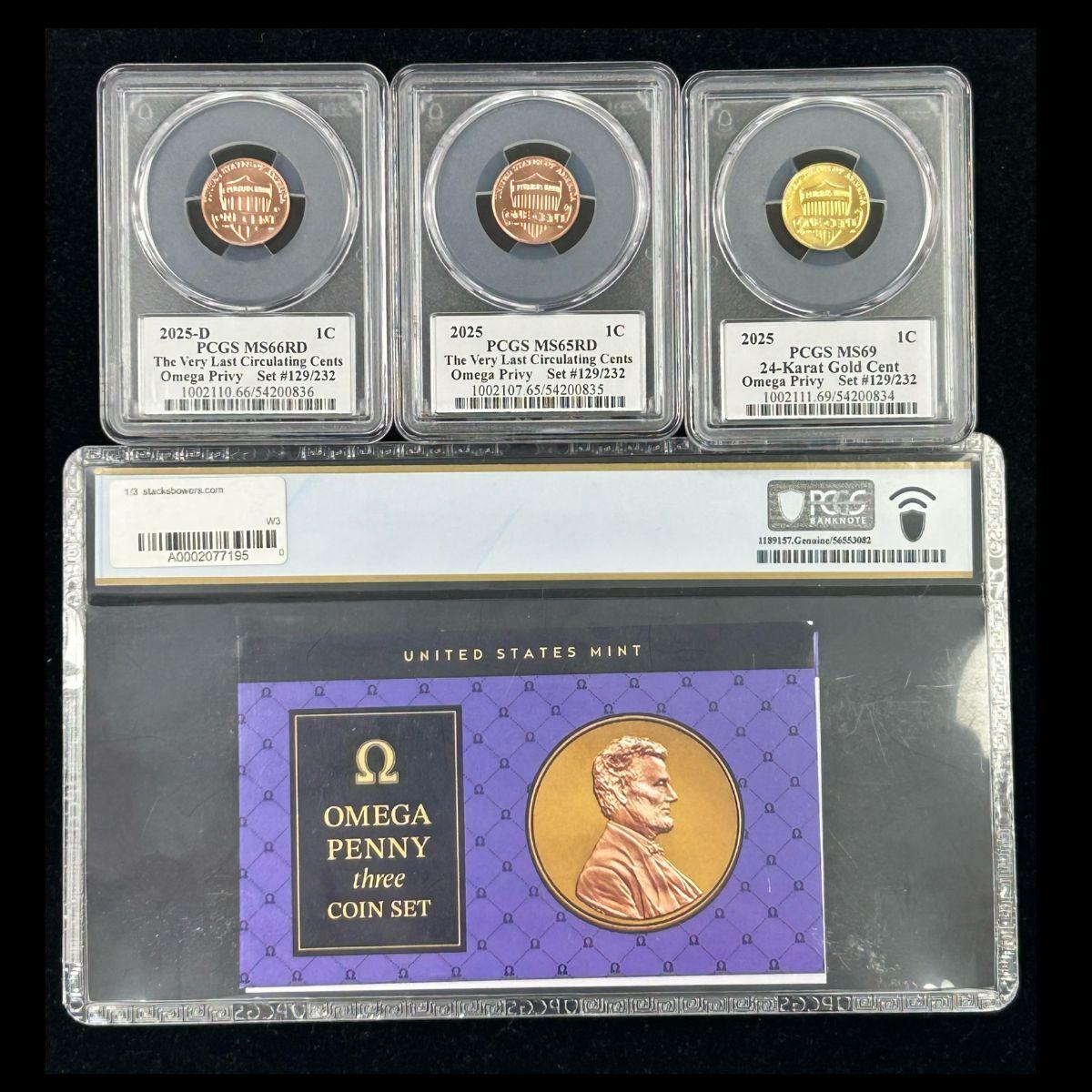
One of the newest and most talked-about pennies worth money is the 2025 Gold Lincoln cent with the Omega privy. This coin was issued by the U.S. Mint as part of a special 232-set program marking the last circulating pennies ever struck. Each set included a 2025-P cent, a 2025-D cent, and a 99.99% 24-karat gold Lincoln cent, all carrying the Omega (Ω) privy mark. Collectors prize this coin because of its tiny issue size, official Mint status, gold composition, and connection to the end of the circulating penny era.
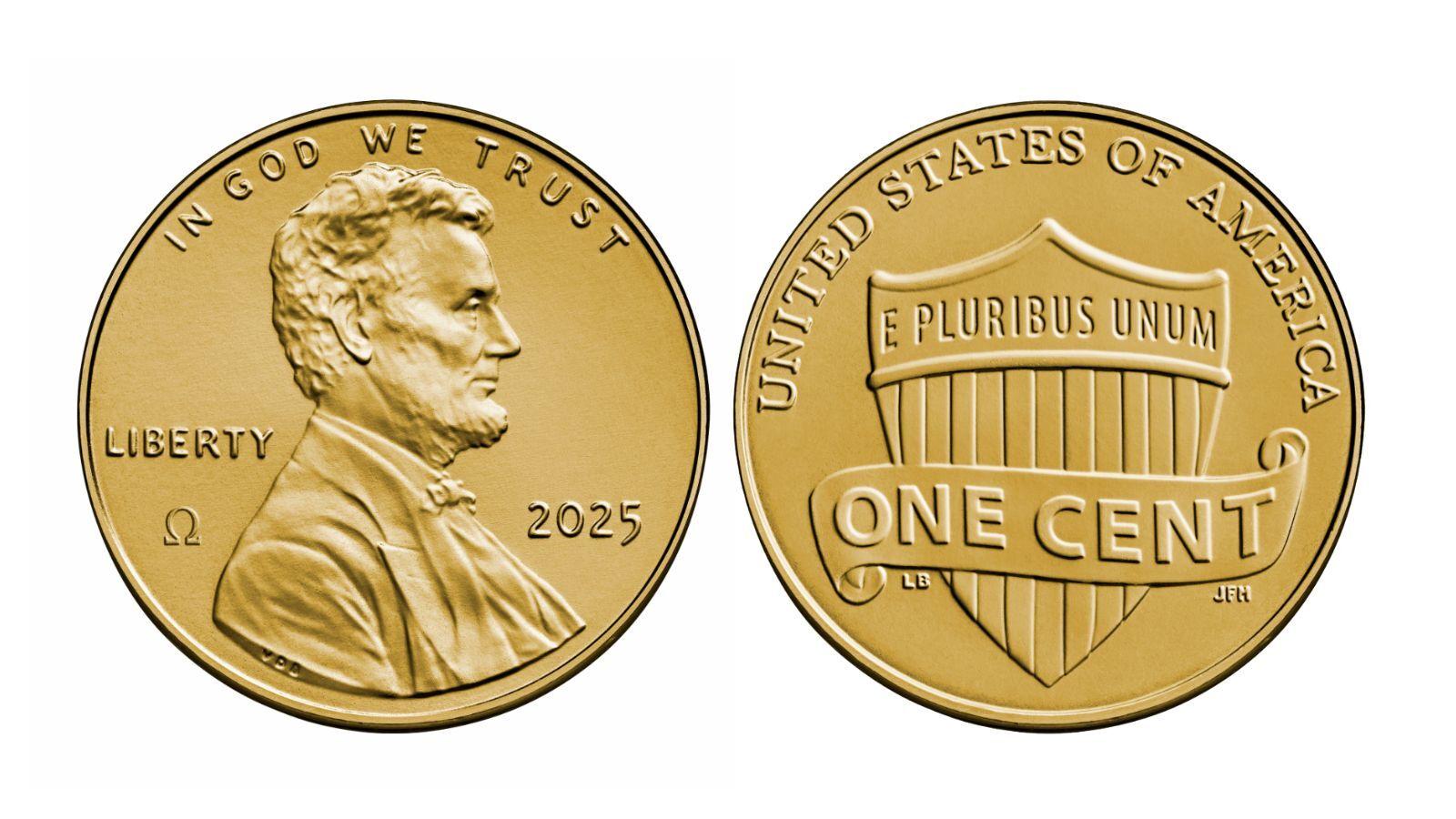
Public pricing is still developing, but the strongest early comps are extraordinary: the full 232-set Mint auction totaled more than $16.76 million, the final Set #232 sold for $800,000, and at least one later three-coin set resale brought $74,362.50. Because most sales have been for complete sets rather than the gold cent alone, values for individual pieces can vary significantly based on certification, provenance, and whether the original Mint package is included.
The 2025 Omega-privy penny is one of the most valuable modern Lincoln cents, but it is not a penny you could pull from circulation. These special cents were issued only in 232 U.S. Mint auction sets, making them far scarcer than normal pocket-change finds.
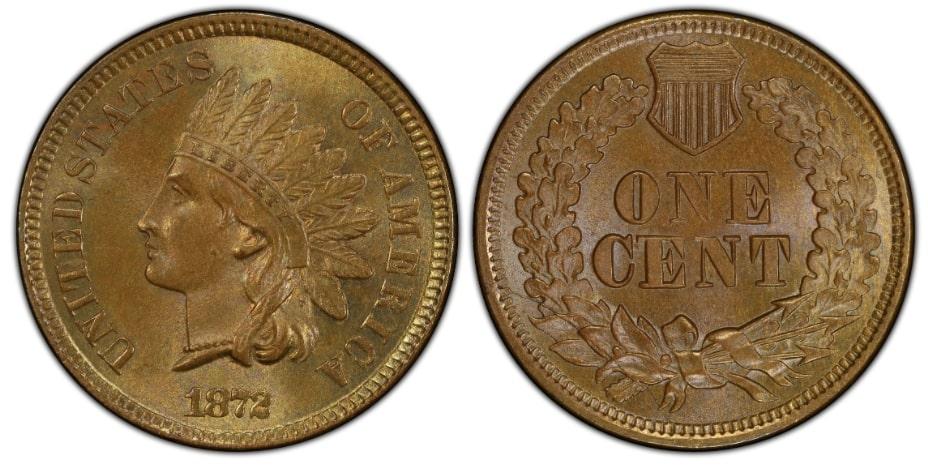
2. 1872 Indian Head Penny - $15,000
The 1872 Indian Head Penny is one of the rarest in the series due to low mintage numbers. Even though the 1871 Indian Head Penny had a lower mintage, the 1872 seems to carry a higher premium in most grades. Approximately 5,000 of these one-cent coins are still in existence, with all grades combined.
The highest recorded auction price for an 1872 Indian Head Penny is around $15,000. This price was achieved for a coin in exceptional condition, such as an MS-65 or higher grade. Auction prices can vary based on factors like the coin's grade, rarity, and demand, so checking recent auction results or consulting with a numismatic expert for the latest information is recommended.
3. 1877 Indian Head Penny - $100,000
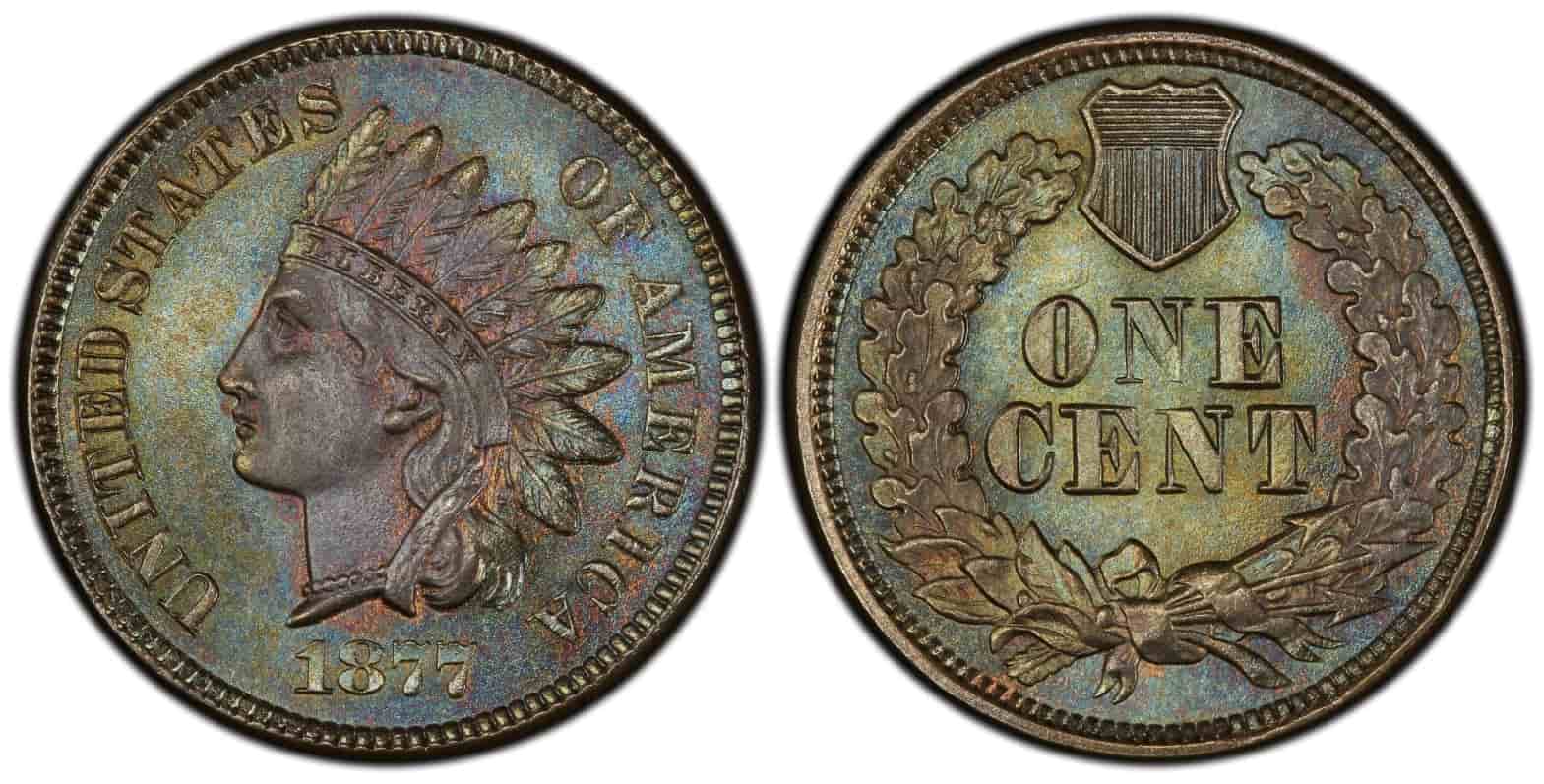
The 1877 Indian Head penny is undeniably the most desirable coin in the entire circulation strike series. It was minted at the Philadelphia Mint.
It has the second lowest mintage, with only the 1909-S Indian Head penny having a lower mintage. Even though it’s not the lowest mintage, fewer of them have survived, likely due to the fact fewer coins were collected in 1877 versus 1909.
The highest recorded auction price for an 1877 Indian Head Penny is around $100,000. This price reflects the coin's exceptional rarity and high grade, such as an MS-66. The 1877 Indian Head Penny is one of the rarest and most sought-after coins in the series, significantly impacting its auction value.
4. 1864 Indian Head Penny–"L" on Ribbon - $92,000
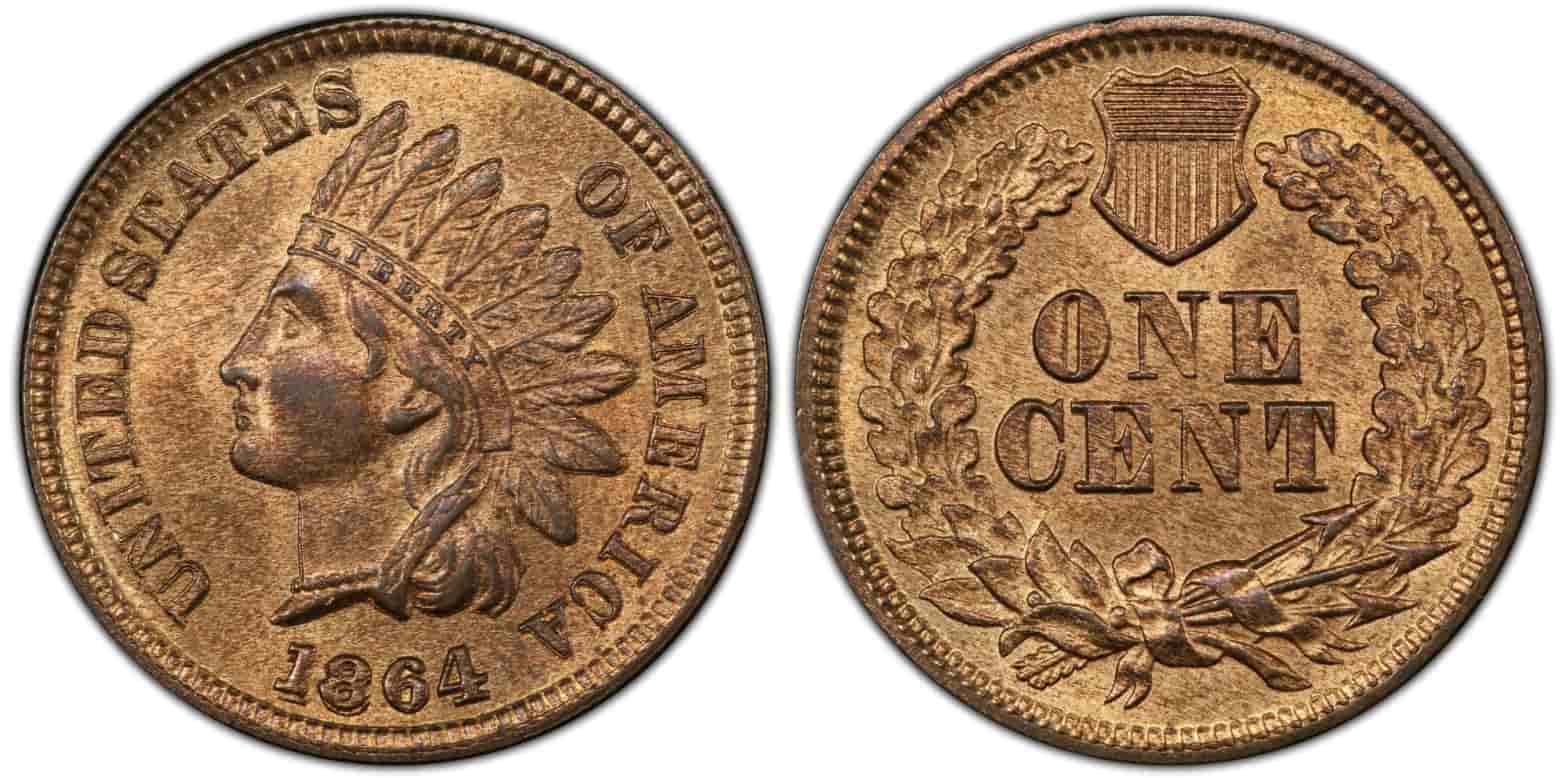
The 1864 Indian Head Penny with an “L” on the ribbon is one of the most famous one-cent U.S. coins. The “L” on the coin’s obverse is there to represent the designer’s (James Longacre) initials. Indian cents from 1859 to 1864 do not have the designer’s initials. The “L” wasn’t added until the end of the year, creating a very popular variety for coin collecting.
The highest recorded auction price for an 1864 Indian Head Penny with the "L" on the ribbon variety is approximately $92,000. This price is typically for coins in excellent condition, such as those graded MS-64 or higher. The "L" on the ribbon variety is a rare and highly sought-after variant, which significantly influences its auction value.
Most Valuable Pennies From the Early to Mid-1900s
Knowing which pennies are key dates or rarities can make it easier to identify which Lincoln Wheat cents are the most valuable coins. Some Lincoln cents are rare coins worth a lot of money, while others are not.
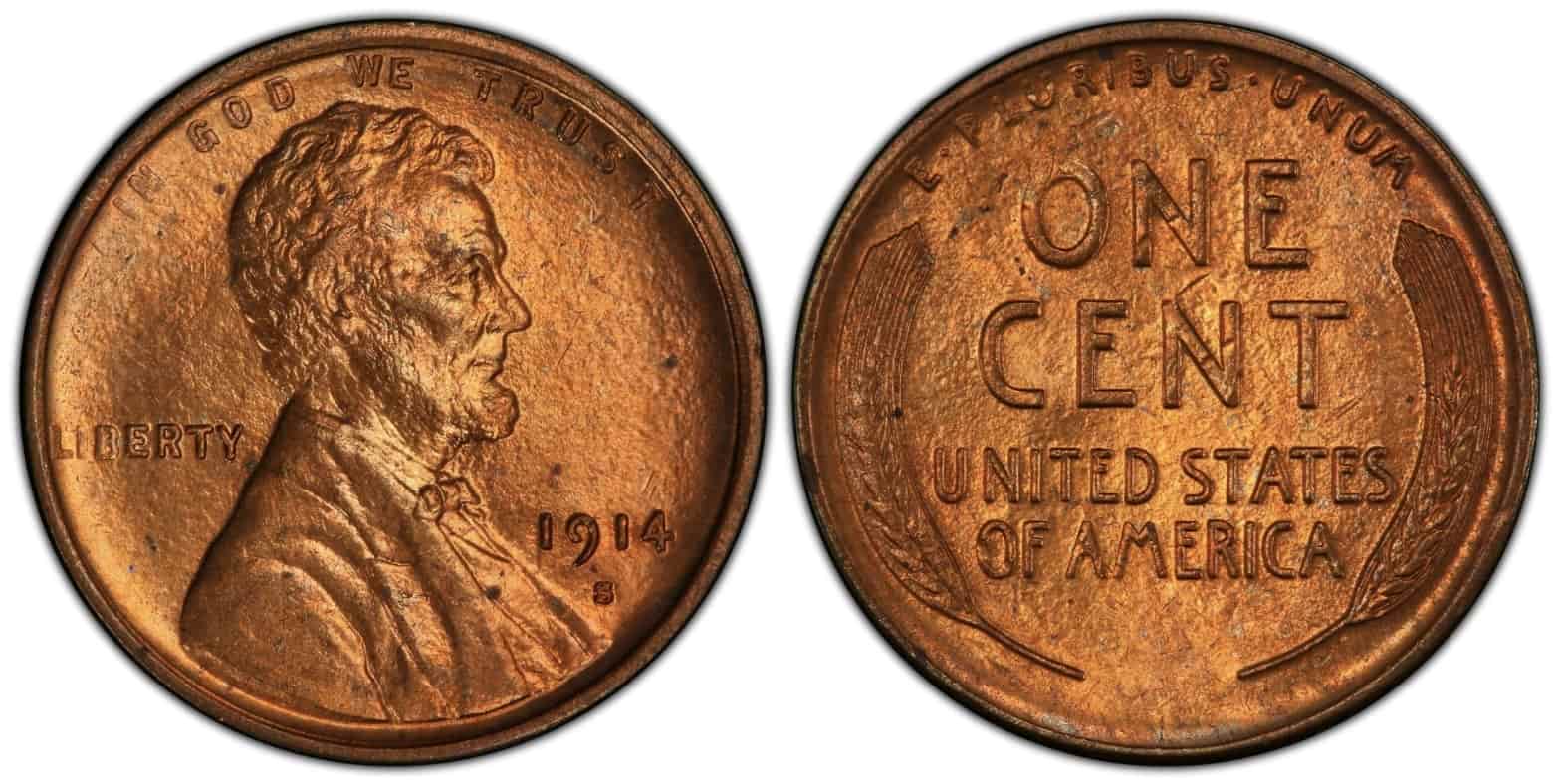
5. 1914-S Lincoln Penny - $330,000
The 1914-S Lincoln penny was issued from the San Francisco Mint with a mintage of 4,137,000. It’s part of the Lincoln Cent series, which began in 1909. The penny’s design features a portrait of Lincoln on the obverse and two wheat ears on the reverse.
The highest recorded auction price for a 1914-S Lincoln Penny is approximately $330,000. This Lincoln Wheat Penny Value is typically for a coin in exceptional condition, such as a high-grade MS-65 or better. The 1914-S Lincoln Penny is considered one of the key dates in the Lincoln penny series, making it highly sought after by collectors and significantly impacting its auction value.
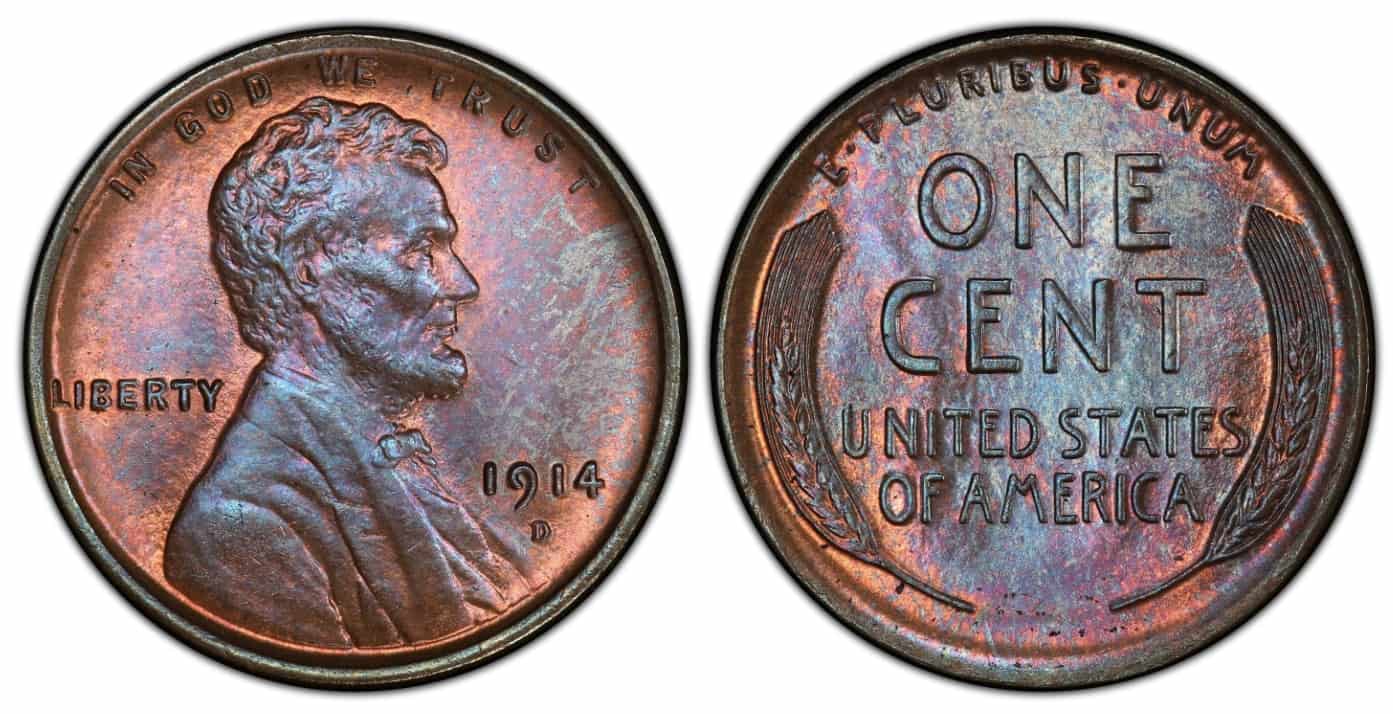
6. 1914-D Lincoln Penny - $420,000
The 1914-D Lincoln penny is a key date because it had one of the lowest mintages (1,193,000) from that year, making it very scarce. To put it in perspective, over 75 million examples were issued from the Denver Mint in 1914.
The highest recorded auction price for a 1914-D Lincoln Penny is around $420,000. This price is usually for a coin in top condition, such as an MS-66 grade. The 1914-D is one of the more sought-after dates in the Lincoln penny series due to its rarity and historical significance, which contributes to its high auction value.
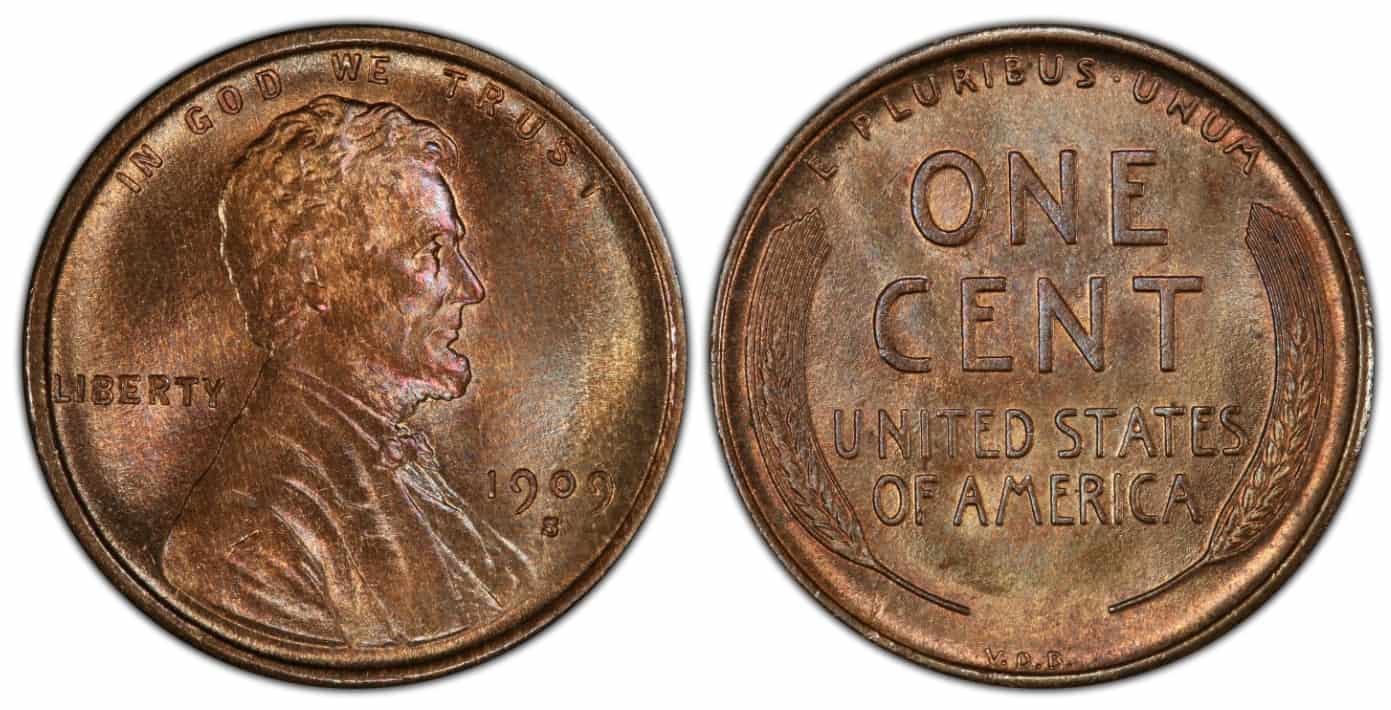
7. 1909-S VDB Lincoln Penny - $1.2 mln
The 1909-S VDB Lincoln Penny is one of the most popular and widely known Lincoln cents. The popularity partially stems from the controversy surrounding the placement of the designer’s initials on the bottom of the coin’s reverse. It’s also due to a very low mintage of 484,000 pieces.
The highest recorded auction price for a 1909-S V.D.B. Lincoln Penny is approximately $1.2 million. This record price is typically for a coin in exceptional condition, such as an MS-67 grade. The 1909-S V.D.B. is one of the most famous and sought-after coins in U.S. numismatics due to its rarity and historical significance, making it highly valuable in the auction market.
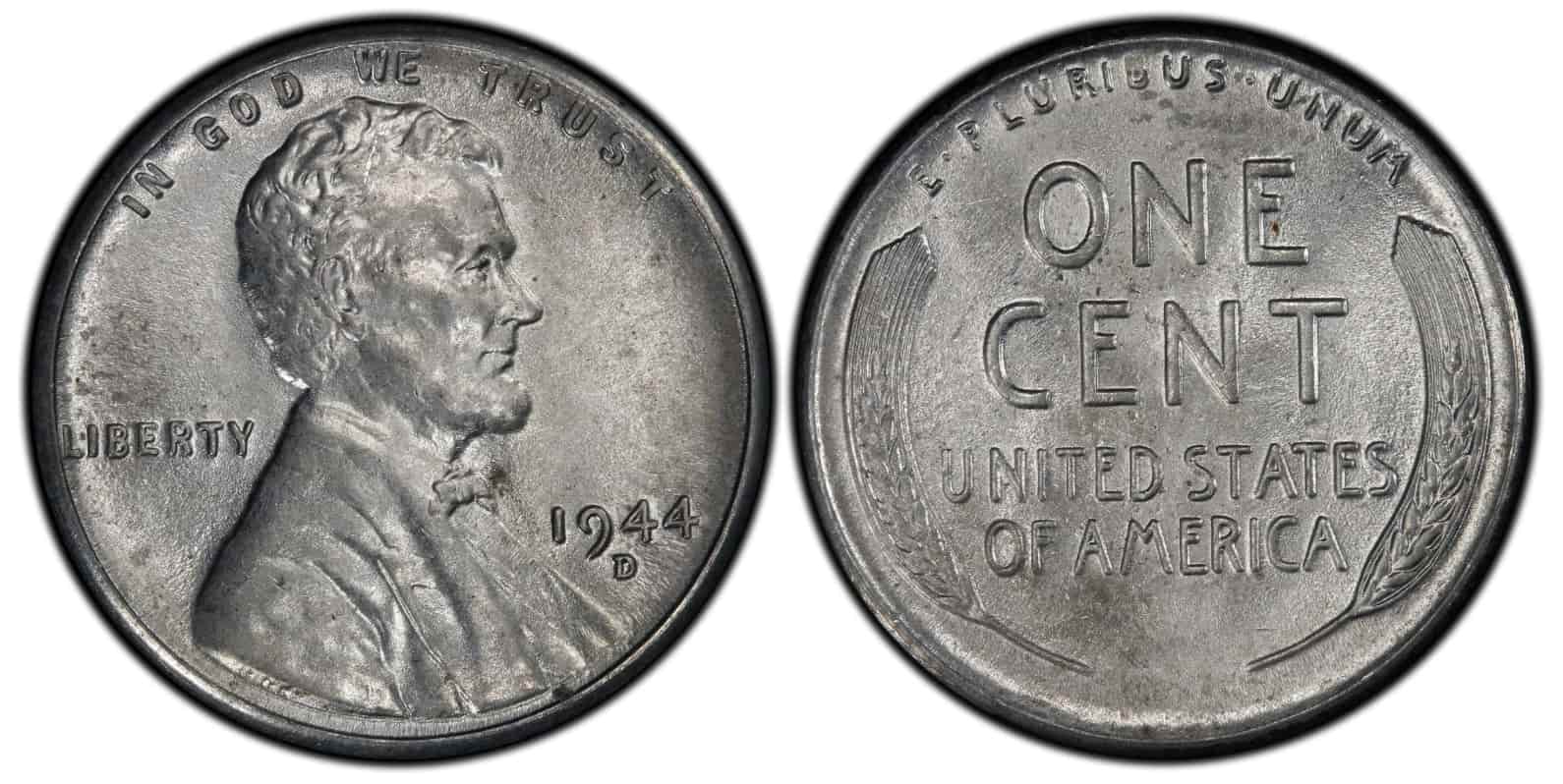
8. 1944-D Lincoln Penny on a Zinc-Coated Steel Planchet - $1.7 min
1944-D Lincoln Pennies are sometimes referred to as steel pennies or silver pennies due to their color. In 1944, nearly all pennies were supposed to transition from steel back to copper (bronze).
These penny errors were produced because a small number of steel planchets were leftover from 1943 and got mixed in. Steel wheat pennies were produced at all three Mints, but only seven to ten steel cents from 1944 with a “D” mint mark still exist.
The highest recorded auction price for a 1944-D Lincoln Penny struck on a zinc-coated steel planchet is approximately $1.7 million. This extraordinary value reflects the coin's extreme rarity and unique error, as most 1944 Lincoln Pennies were struck on bronze planchets, making the steel version a highly coveted numismatic anomaly.
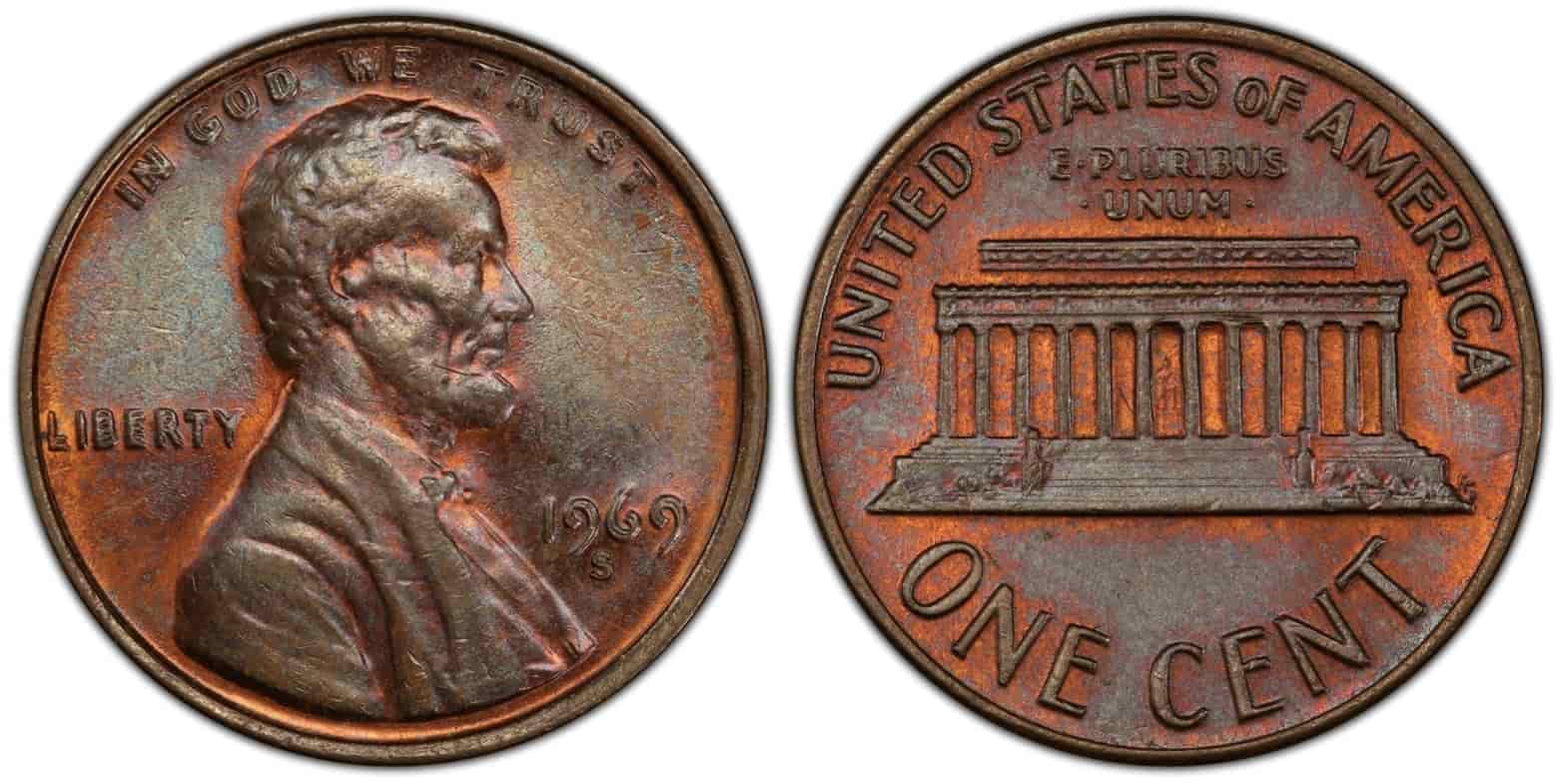
9. 1969-S Lincoln Penny–Double Die Obverse - $1.7 mln
The 1969-S Lincoln Penny doubled die obverse is an extremely rare penny and is known for being one of the most elusive and valuable coins of all Lincoln cents. The doubling on the 1969-S is prominent in the date and easily visible to the naked eye. More than a couple of dozen of these rare coins have appeared in circulation, with more specimens believed to exist.
The highest recorded auction price for a 1969-S Lincoln Penny with a Doubled Die Obverse is approximately $1.7 million. This exceptional value is due to the coin's extreme rarity and the dramatic doubling visible on the obverse, making it one of the most sought-after error coins in U.S. numismatics.
Honorable Mentions:
| COIN | WORTH |
| 1982 Lincoln Penny | $45 |
| 2006 D Lincoln Penny | $35 |
| 2002 D Lincoln Penny | $30 |
| 1975 D Lincoln Penny | $30 |
| 2002 Lincoln Penny | $27 |
| 2005 D Lincoln Penny | $25 |
| 2014 S Shield Penny | $25 |
| 2012 D Shield Penny | $25 |
| 1968 S Lincoln Penny | $25 |
| 2012 S Shield Penny | $25 |
| 2013 S Shield Penny | $25 |
| 2013 D Shield Penny | $25 |
| 2017 S Shield Penny | $22 |
| 2010 D Shield Penny | $21 |
| 2015 S Shield Penny | $20 |
| 1993 D Lincoln Penny | $20 |
| 2012 Shield Penny | $20 |
| 2013 Shield Penny | $20 |
| 2016 S Shield Penny | $18 |
| 2007 S Lincoln Penny | $16 |
| 1968 D Lincoln Penny | $16 |
| 2006 Lincoln Penny | $16 |
| 2020 S Shield Penny | $15 |
| 2021 S Shield Penny | $15 |
| 2022 S Shield Penny | $15 |
| 1968 Lincoln Penny | $15 |
| 1969 Lincoln Penny | $15 |
| 1970 D Lincoln Penny | $15 |
| 2014 D Shield Penny | $15 |
| 2018 S Shield Penny | $15 |
| 2019 W Shield Penny | $15 |
| 1970 S Lincoln Penny | $15 |
| 1992 Lincoln Penny | $15 |
| 2005 Lincoln Penny | $15 |
| 2011 S Shield Penny | $15 |
| 2014 Shield Penny | $15 |
| 2010 Shield Penny | $15 |
| 2011 Shield Penny | $15 |
| 2011 D Shield Penny | $15 |
| 2019 S Shield Penny | $14 |
| 1980 Lincoln Penny | $14 |
| 1969 S Lincoln Penny | $12 |
| 2009 S Shield Penny | $12 |
| 2009 S Shield Penny | $12 |
| 1966 Lincoln Penny | $12 |
| 1967 Lincoln Penny | $12 |
| 1969 D Lincoln Penny | $12 |
| 2010 S Shield Penny | $10 |
| 1995 Lincoln Penny | $9 |
| 1980 D Lincoln Penny | $9 |
| 1978 Lincoln Penny | $9 |
| 1975 Lincoln Penny | $9 |
| 1974 S Lincoln Penny | $9 |
| 1974 D Lincoln Penny | $9 |
| 1974 Lincoln Penny | $9 |
| 1973 S Lincoln Penny | $9 |
| 1973 D Lincoln Penny | $9 |
| 2016 D Shield Penny | $8 |
| 2015 D Shield Penny | $8 |
| 2015 Shield Penny | $8 |
| 2004 S Lincoln Penny | $8 |
| 1981 D Lincoln Penny | $8 |
| 1979 D Lincoln Penny | $8 |
| 1977 Lincoln Penny | $8 |
| 1977 D Lincoln Penny | $8 |
| 1973 Lincoln Penny | $8 |
| 1972 Lincoln Penny | $8 |
| 1972 D Lincoln Penny | $8 |
| 1972 S Lincoln Penny | $8 |
| 1971 Lincoln Penny | $8 |
| 1971 D Lincoln Penny | $8 |
| 1971 S Lincoln Penny | $8 |
| 2016 Shield Penny | $7 |
| 1985 S Lincoln Penny | $6 |
| 1982 D Lincoln Penny | $6 |
| 1979 Lincoln Penny | $6 |
| 2009 S Shield Penny | $5 |
| 2009 S Shield Penny | $5 |
| 1985 D Lincoln Penny | $5 |
| 1983 Lincoln Penny | $5 |
| 1975 S Lincoln Penny | $5 |
| 1970 Lincoln Penny | $5 |
| 1984 S Lincoln Penny | $4 |
| 1983 S Lincoln Penny | $4 |
| 1981 S Lincoln Penny | $4 |
| 1980 S Lincoln Penny | $4 |
| 1979 S Lincoln Penny | $4 |
| 1977 S Lincoln Penny | $4 |
| 1976 S Lincoln Penny | $4 |
| 2018 Shield Penny | $3 |
| 2017 P Shield Penny | $3 |
| 2017 D Shield Penny | $3 |
Lincoln Wheat Penny value
Lincoln Wheat Penny value is driven by scarcity, condition and historical facts. Struck from 1909 to 1958, these cents carry America’s first portrait of President Lincoln and often hide surprising worth well beyond one cent. Key dates like the 1909-S VDB, 1914-D, and the steel-shortage 1943 bronze error can command four to five figures, while common dates in pristine, red Mint State still outpace face value thanks to copper premiums and collector demand. Mintmarks, die varieties, and third-party grading all play pivotal roles, so whether you’re sifting through pocket change or evaluating an inherited hoard, it pays to know how seemingly ordinary Wheat Cents can transform into rare coins.
Know More About Your Pocket Change
Ultimately, penny values can vary in value by a great amount depending on the rarity, condition, and other factors. It’s important to do your research before buying any U.S. coin for a large sum of money, so we’ve provided a short list of prominent coin graders:
- United State Mint
- American Numismatic Association (ANA)
- American Numismatic Society (ANS)
- Numismatic Guaranty Corporation (NGC)
- Professional Coin Grading Service (PCGS)
Top Resources for Coin Collectors
Collectors know to buy from the best coin dealers. Bullion Shark is here with rare, ancient, and modern coins, collector sets, and more. Whether you’re looking for rare dimes, error coins, or valuable half dollars (and more), there’s something for everyone.
If you have questions, we have numismatic experts on staff that will be happy to help.
Sources:
Penny | U.S. Mint
Half-Cents and Cents | PCGS CoinFacts
Bullion Sharks | Lincoln Wheat Penny Value Guide
Lincoln Wheat PennyKey Dates, Rarities and Varieties | The Spruce Crafts
Lincoln Cents, Wheat Reverse (1909-1958) | NGC Coin Explorer
FAQs
What pennies are worth money in 2026?
The pennies worth the most money in 2026 are usually key-date Lincoln cents, major error coins, and scarce varieties. Some of the most famous examples include the 1909-S VDB, 1914-D, 1922 No D, 1931-S, 1943 bronze cent, 1955 doubled die obverse, and 1969-S doubled die obverse. In general, a penny becomes more valuable when it has the right combination of rarity, demand, mint mark, error, and condition. Modern collectors also pay attention to important late-date issues tied to the end of circulating penny production.
How can I tell if my penny is valuable?
Start by checking the date, mint mark, and overall condition. Then look for major varieties, visible doubling, unusual color, incorrect weight, or other striking errors. For example, a 1943 cent that is not magnetic may deserve closer inspection, while an older copper-alloy cent should weigh about 3.11 grams and a modern zinc cent about 2.50 grams. If you think you have an expensive coin, it is smart to compare it to authenticated examples and consider certification through a major grading service such as PCGS or NGC.
What makes a penny rare?
A penny is usually rare because of one or more of these factors: low mintage, a major mint error, a scarce die variety, historical importance, or low survival in high grades. Some coins are rare because very few were made, while others are rare because very few nice examples remain. In many cases, the most valuable pennies are not just old, they are coins with a recognized variety or a very limited surviving population in collectible condition.
Are wheat pennies worth anything?
Yes. Many Wheat cents are worth more than face value, especially if they are from a better date, have an error or variety, or survive in strong uncirculated condition. Wheat cents were struck from 1909 to 1958, and some of the most important examples include the 1909-S VDB, 1914-D, 1922 No D, 1931-S, and 1955 doubled die obverse. Common circulated Wheat cents are often modestly valuable, while scarce and certified examples can be worth far more.
What are the rarest wheat pennies?
Among the best-known rare Wheat cents are the 1909-S VDB, 1914-D, 1922 No D, 1931-S, and the famous 1955 doubled die obverse. These coins are heavily collected because they combine strong demand with low availability, especially in better grades. For many collectors, these are the cornerstone rarities of the Wheat cent series.
What errors make pennies valuable?
Some of the most valuable penny errors and varieties include doubled dies, off-center strikes, wrong-planchet errors, major die breaks, repunched mintmarks, and wrong-metal transitional pieces. Famous examples include the 1955 doubled die obverse, 1969-S doubled die obverse, 1983 doubled die reverse, and 1984 doubled ear variety. In general, the more dramatic and better-known the error, the stronger the collector demand tends to be.
Are pennies magnetic?
Most U.S. pennies are not magnetic. Pre-1982 Lincoln cents were primarily copper alloy, and modern cents are copper-plated zinc, neither of which should stick to a magnet. The major exception is the 1943 steel cent, which is magnetic because it was struck on zinc-coated steel planchets during World War II. If a penny is magnetic and is not a genuine 1943 steel cent, it may require closer examination.
Are pennies made of copper?
Some are, but not all. The U.S. Mint says the 2025 penny is composed of 2.5% copper and 97.5% zinc and weighs 2.50 grams. Older Lincoln cents were struck in a heavier copper alloy, which is why collectors often separate earlier pieces from later zinc-core cents. The most important transition year is 1982, when both copper-alloy and copper-plated zinc cents were produced.
When did they stop making copper pennies?
The major composition change happened in 1982, when the Mint transitioned away from the traditional copper-alloy cent to the lighter copper-plated zinc format used today. That makes 1982 an important transitional year because both major compositions exist. Modern cents, including the 2025 issue described by the Mint, continue to use the zinc core with a thin copper layer.
Are pennies still being made?
Not for circulation. The U.S. Mint says circulating penny production was suspended in 2025 after the Treasury determined the coin was no longer necessary to meet the needs of the United States. However, the Mint also says it will continue producing numismatic collector versions of the penny in limited quantities. That means pennies remain a live collectible series even though new circulation strikes have ended.
Can I still use pennies in stores?
Yes. The U.S. Mint states that the penny remains legal tender and may still be used in retail transactions. Even though new pennies are no longer being struck for circulation, the coins already in the marketplace can still be spent, saved, or collected.
Are pennies going extinct?
Pennies are not extinct, but they have entered a new phase. The Mint says circulation production ended in 2025, while existing coins remain legal tender and collectible versions continue in limited quantities. In other words, the penny is no longer being produced for everyday circulation, but it is still part of U.S. coinage history and remains widely collected.
What 1980s pennies are worth money?
Several 1980s cents attract collector interest, especially the 1982 transitional varieties, the 1983 doubled die reverse, and the 1984 doubled ear variety. Higher-grade copper-alloy pieces from the early 1980s can also be collectible, especially when certified in top condition. The 1980s are important because they include the copper-to-zinc transition and several popular varieties recognized by collectors.
Are there any valuable modern pennies?
Yes, but most valuable modern pennies are valuable because of errors, top grades, or special issues, not because they are common circulation coins. Popular late-date collector targets include doubled dies, transitional composition pieces, top-pop certified coins, and the 2025 Omega-privy cents, which are modern rarities connected to the end of circulating penny production.
What pennies are worth money today?
Many pennies from 1909 to 1958 (known as wheat pennies) are worth more than face value, especially key dates like 1909‑S VDB, 1914‑D, 1922 “no D,” 1931‑S and error coins like the 1955 doubled‑die and 1943 bronze cents. Modern pennies can also be valuable if they feature errors such as the 1969‑S doubled die or 1992 close AM varieties.
What years of pennies are worth money?
While any year can produce a valuable variety, look for pennies minted between 1909 and 1958 with wheat stalks on the reverse, as well as certain Memorial and Shield cents from 1959 onward that feature errors. High‑value years include 1909, 1914, 1917, 1922, 1931, 1943–1944, 1955, 1958, 1969–1972, 1990–1992 and 2025.
How do I identify a doubled‑die penny?
A doubled‑die penny shows duplicated images on the lettering or design, caused by misalignment during die preparation. The doubling is part of the design (not a coin struck twice) and is best seen under magnification. Notable examples include the 1955, 1969‑S, 1972 and 1970‑S doubled‑die obverses.
Are copper pennies worth more than face value?
Pennies struck before 1982 consist mostly of copper and contain about 2.95 grams of copper. When copper prices rise, the metal value alone can exceed one cent. However, it is illegal to melt U.S. pennies for scrap, so their value as collectibles or bullion is limited. High‑grade red specimens and rare varieties command premiums.
What should I do if I think I found a rare penny?
If you suspect you have a valuable penny, avoid cleaning it. Compare it to images of known varieties and weigh it to check composition. Then consult a professional coin dealer or grading service for authentication. For extremely valuable coins, professional grading by NGC or PCGS will maximise resale value.
How can collectors make sure a valuable penny is authentic?
Collectors should compare suspected rarities to verified examples, check weight and composition, and be careful with famous high-dollar coins that are often counterfeited. The safest route is to buy or sell expensive coins through reputable dealers and use a major third-party grading service such as PCGS or NGC for authentication and grading. Certification is especially important for major rarities, wrong-metal errors, and expensive varieties.
Modern Pennies Worth Money
Not every valuable penny is a classic Wheat cent. Some modern Lincoln cents are worth strong money because of major varieties, transitional composition interest, elite condition rarity, or their connection to the final years of penny production. For collectors in 2026, modern issues are especially important because the U.S. Mint says the penny ceased to be minted for circulation in 2025, while collector versions continue in limited quantities. That gives certain late-date cents added historical interest that older versions of this article likely did not cover.
1982 Transitional Cents
The 1982 cent is one of the most important modern dates because it marks the shift from the older copper-alloy composition to the lighter copper-plated zinc format. That means multiple 1982 varieties exist, and weight becomes critical when identifying them. Collectors pay especially close attention to unusual 1982 combinations because the transition year produced both heavier and lighter cents.
1983 Doubled Die Reverse Penny
The 1983 doubled die reverse is one of the best-known modern Lincoln cent varieties. Strong doubling on the reverse lettering makes it a favorite among error collectors, and authenticated examples can be worth much more than face value. NGC identifies the 1983 doubled die reverse as part of the popular Memorial cent variety landscape that keeps modern pennies relevant to collectors.
1984 Doubled Ear Penny
Another notable modern variety is the 1984 Doubled Ear Lincoln cent. This coin shows visible doubling on Lincoln’s ear and remains one of the better-known collector varieties from the 1980s. It is a strong example of why modern pennies should not be ignored just because they are newer or more common overall.
High-Grade Modern Pennies
Even common-date modern cents can become valuable in top-certified grades. Pennies are widely saved, but true superb gems with strong eye appeal, full red color, and clean surfaces can still be difficult to find. That makes registry-quality examples of otherwise ordinary dates more desirable than most casual collectors expect.
2025 Omega Privy Lincoln Cents
One of the most important modern penny stories is the 2025 Omega-privy Lincoln cent program. These were not regular circulation finds. Instead, they were issued as special collector coins connected to the close of the circulating penny era. The standout gold issue, the 2025 1C 24-Karat Gold Cent Omega Privy, was struck at Philadelphia, weighs 6.60 grams, is made of 99.99% gold, and currently shows no standalone auction record on PCGS CoinFacts. That matters because it means writers should avoid claiming a firm public single-coin auction benchmark unless one is specifically documented.
Other Articles You May Like:
1943 Steel Penny Value: How Much Steel Penny Coins Are Worth Now?
Statehood Quarters: U.S. Mint State Quarters Program and the Delaware Quarter
The Morgan Dollar Coins Values and History
Susan B. Anthony Dollar Coin Values and Prices
Rare Quarters Worth Money List
Learn more about: 1909 vdb penny value, 2023 silver eagle value, 1955 wheat penny value, 1953 d wheat penny value, 1957 wheat penny value, 1946 half dollars, 1956 penny value, Lincoln Wheat Penny Valuation.
The humble penny may soon disappear from daily commerce, but it remains a vibrant area of numismatics. Collectors prize low‑mintage dates, major errors, high‑grade examples and coins tied to historical milestones. Our Top 100 pennies worth money list highlights the Lincoln cents and wheat pennies that consistently fetch the highest prices at auction. Remember, values fluctuate with market demand and metal prices, so consult up‑to‑date resources and professional appraisers when evaluating your own coins. Happy treasure hunting!