

Guide to the 1913 Liberty Head Nickel
Posted by Andrew Adamo - A certified ANA Professional Numismatist, Active member of ICTA, contributor to CoinWeek, Numismatic News, NGC and ANA on May 19th 2026
Guide to the 1913 Liberty Head Nickel
The 1913 Liberty Head Nickel ranks among the most famous and valuable coins in American numismatics, with values ranging from approximately $3 million to over $5 million depending on grade and provenance. The highest authenticated auction record reached $4.56 million in 2018, solidifying this unauthorized five-cent piece as one of the world's most coveted collectibles.
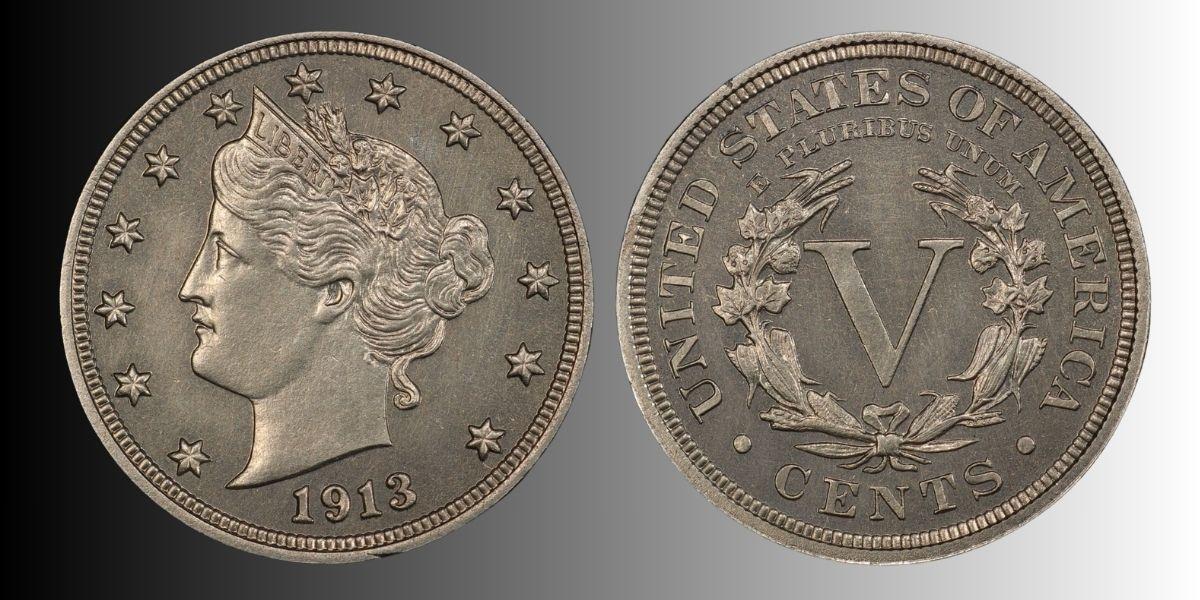
AUCTION RECORD: $4,560,000 • PR66 • 08-22-2018
Understanding the 1913 Liberty Head Nickel
The 1913 Liberty Head Nickel represents one of numismatics' greatest mysteries and most legendary rarities. Only five specimens are known to exist, and their very creation remains shrouded in controversy. The coin was never authorized for production, as the Liberty Head design had been officially replaced by the Buffalo Nickel in 1913. Yet five pieces bearing the 1913 date and Liberty Head design were somehow struck at the Philadelphia Mint, launching more than a century of intrigue, authentication battles, and record-setting transactions.
For collectors, these coins represent the pinnacle of American numismatic rarity. Each of the five specimens has its own documented history, provenance chain, and distinctive characteristics. Unlike many rare coins that exist in small but measurable quantities, the 1913 Liberty Head Nickel occupies a unique position: every single specimen is accounted for, named, and tracked within the collecting community.
This guide examines the history, authentication, market position, and enduring appeal of what many consider America's most famous coin. Whether accessible only through study and appreciation or as an aspirational collecting goal, the 1913 Liberty Head Nickel continues to captivate numismatists at every level.
Historical Background and Origin Mystery
The Liberty Head Nickel design, created by Chief Engraver Charles E. Barber, served as America's five-cent piece from 1883 through 1912. The obverse featured Miss Liberty facing left, wearing a coronet inscribed with the word LIBERTY, surrounded by stars and the date. The reverse displayed a Roman numeral V within a wreath, with UNITED STATES OF AMERICA encircling the design and CENTS below.
By 1912, the Treasury Department had commissioned a new design to replace the Liberty Head series. James Earle Fraser's Buffalo Nickel, featuring a Native American profile on the obverse and an American bison on the reverse, was chosen to modernize the five-cent denomination. Production of Buffalo Nickels began in early 1913, officially ending the Liberty Head era.
No Liberty Head Nickels dated 1913 were authorized, requested by Treasury officials, or included in any official Mint production records. Yet five specimens surfaced in the numismatic marketplace in 1919 when a dealer named Samuel W. Brown advertised them in The Numismatist, offering to purchase any examples collectors might discover. Brown himself owned all five pieces, having likely acquired them years earlier under circumstances that remain debated to this day.
The Samuel Brown Connection
Samuel W. Brown worked at the Philadelphia Mint during the transitional period between Liberty Head and Buffalo Nickel production. His advertisement seeking 1913 Liberty Head Nickels appeared calculated to establish market presence for coins he already possessed. When no additional examples emerged despite his public solicitation, Brown revealed his own five specimens at the 1920 American Numismatic Association convention.
The numismatic community received these coins with skepticism initially, but authentication efforts during the 1920s confirmed their genuinity as products of official Mint dies and planchets. The prevailing theory suggests Brown struck the five pieces clandestinely, either as souvenirs or with entrepreneurial intent, using 1913-dated dies that had been prepared but never officially utilized for production.
Brown retained the five coins until his death in 1944, after which they were sold at auction and began their individual journeys through the hands of prominent collectors, dealers, and institutions. Each specimen eventually acquired its own identity based on subsequent owners and grade designations.
Why Collectors Focus on the 1913 Liberty Head Nickel
The 1913 Liberty Head Nickel occupies a special position in numismatic consciousness that transcends typical rarity considerations. Several factors contribute to the enduring collector fascination with these five coins.
Absolute Rarity and Completeness
Unlike other rare coins where population estimates involve some uncertainty, the 1913 Liberty Head Nickel population is definitively established at five specimens. Every example is accounted for, authenticated, and documented. This absolute certainty creates a unique collecting dynamic where the entire population can be studied, compared, and appreciated without speculation about hidden examples.
The small population also means these coins appear at auction or change hands infrequently, creating significant events when transactions occur. Each sale generates numismatic community attention and often establishes new price benchmarks that reflect evolving collector demand.
Historical Mystery and Unauthorized Status
The circumstances surrounding the coins' creation add narrative appeal that enhances pure numismatic interest. The fact that these pieces were never officially authorized, never entered circulation, and resulted from activities that bent or broke Mint protocols contributes to their mystique. Collectors appreciate not just the physical rarity but the story each coin represents.
This unauthorized origin distinguishes the 1913 Liberty Head Nickel from pattern coins, trial strikes, or other Mint products created through official experimental processes. The coins exist in a category between official issue and private creation, struck on government equipment with official dies and planchets but without Treasury authorization.
Museum Quality and Investment Significance
Several specimens have resided in museum collections, including the Smithsonian Institution, further cementing the coins' status as numismatic artifacts of national importance. This institutional recognition validates the historical and cultural significance beyond pure market considerations.
For private collectors with resources to pursue trophy rarities, the 1913 Liberty Head Nickel represents an acquisition that combines multiple appeal factors: investment quality, historical importance, aesthetic appeal, and social recognition within the collecting community.
Design Specifications and Authentication Details
The 1913 Liberty Head Nickel maintains the same design specifications as earlier Liberty Head Nickels produced from 1883 through 1912, with the critical difference being the 1913 date that should not exist on this design type.
Physical Specifications
The coins feature standard Liberty Head Nickel specifications established when the series began in 1883. The composition consists of 75 percent copper and 25 percent nickel, creating the distinctive gray-white appearance characteristic of this alloy. The diameter measures 21.2 millimeters, with a weight of 5 grams and a plain edge without reeding.
The obverse design shows Liberty facing left, wearing a coronet bearing the inscription LIBERTY. Thirteen stars encircle the portrait, with the date 1913 below. The reverse displays a Roman numeral V centered within an agricultural wreath, with UNITED STATES OF AMERICA around the periphery and CENTS at the bottom.
Die Characteristics and Authentication Markers
Authentication of 1913 Liberty Head Nickels requires expert examination, though the number of counterfeits is relatively limited given the extreme scrutiny any purported specimen would receive. Genuine examples were struck from official Mint dies using proper planchets and equipment, resulting in strike characteristics consistent with legitimate Mint products.
The date numerals, star positioning, Liberty portrait details, and reverse wreath elements match the style and execution of late-period Liberty Head Nickels from 1910 through 1912. Die preparation methods, metal flow patterns, and surface characteristics under magnification reveal authentic Mint production techniques rather than aftermarket alterations or private fabrications.
Known counterfeits typically involve altered 1903 or 1912 Liberty Head Nickels with dates modified to read 1913. Careful examination of numeral style, surface disturbance around the date area, and comparison with authenticated specimens reveals such alterations. Given the extreme value and limited population, any claimed discovery of a sixth specimen would face intense professional scrutiny before acceptance.
The Five Known Specimens
Each of the five 1913 Liberty Head Nickels has its own documented history and identity within the numismatic community. Collectors and researchers often refer to specimens by their most famous owners or current custodians.
The Eliasberg Specimen
Graded Proof-66 by major certification services, this specimen resided in the legendary collection of Louis E. Eliasberg Sr., the only collector to assemble a complete collection of United States coins by date and major variety. The coin exhibited exceptional preservation and eye appeal when sold at auction following Eliasberg's collection dispersal.
The Norweb Specimen
Another high-grade example, this coin passed through the collection of the Norweb family, prominent collectors whose holdings were dispersed at auction in the 1980s and 1990s. The specimen demonstrated strong technical quality and attractive surfaces.
The Olsen Specimen
This example gained fame for its association with Fred Olsen and subsequent appearances in museum exhibitions. The coin's provenance includes multiple prominent collectors and periods of public display that increased its name recognition beyond specialist circles.
The McDermott Specimen
Named for a former owner, this specimen achieved particular notoriety when it disappeared for decades, spawning theories about its fate. The coin eventually resurfaced and was authenticated, reuniting all five known specimens in documented collections.
The Smithsonian Specimen
One example resides permanently in the National Numismatic Collection at the Smithsonian Institution, ensuring public access for educational purposes and removing one specimen from the private marketplace. This institutional holding reinforces the coins' status as numismatic artifacts of national significance.