


Why the U.S. Mint Stopped Making One-Cent Coins
Posted by A certified ANA Professional Numismatist, Active member of ICTA, contributor to CoinWeek, Numismatic News, NGC and ANA on May 15th 2026
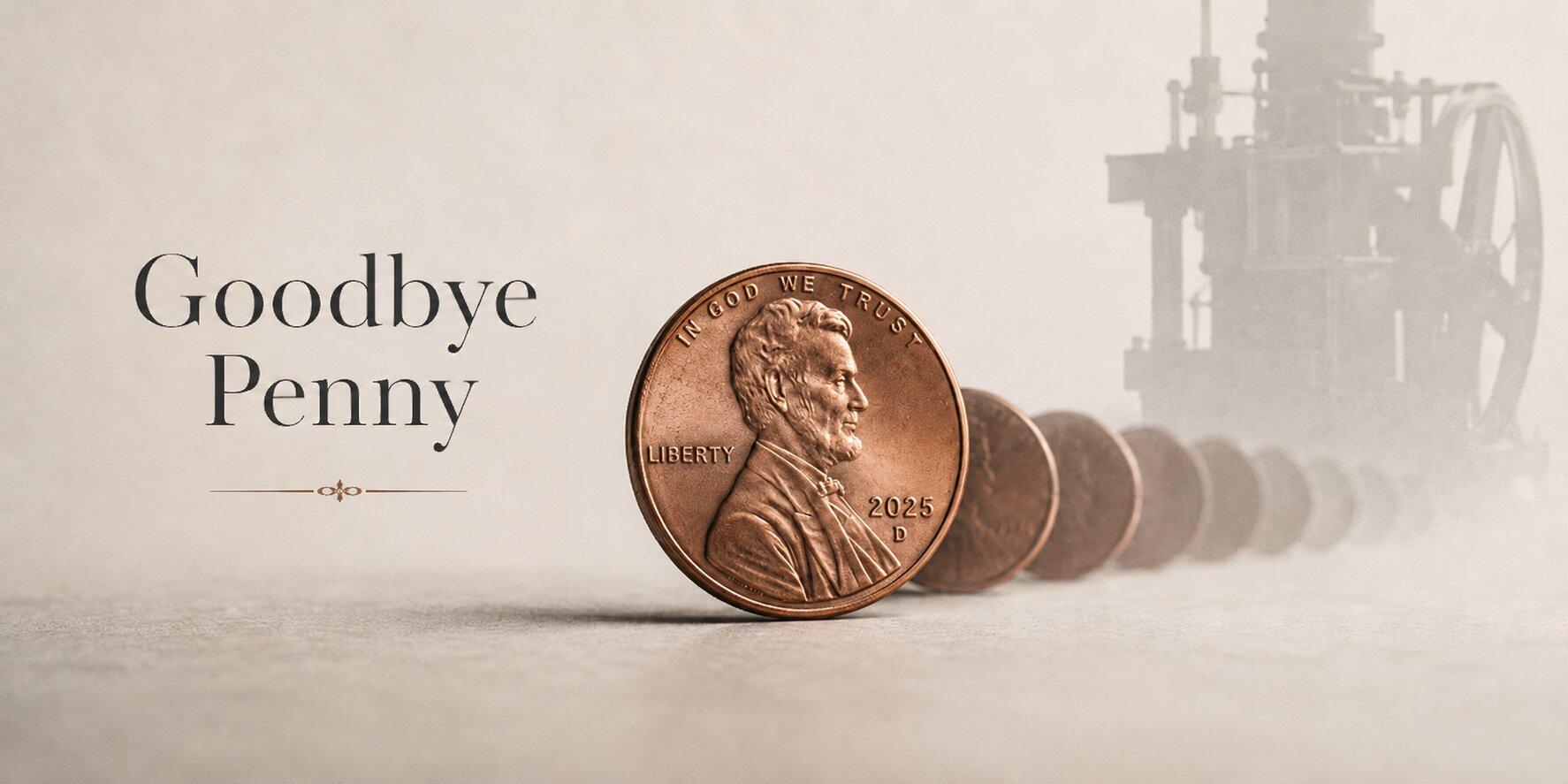
Goodbye Penny: The U.S. Mint Stopped Making One-Cent Coins After 230 Years
The United States has officially said goodbye to the circulating penny.
After more than 230 years in American pockets, cash registers, piggy banks, and coin jars, the U.S. Mint has ended production of the one-cent coin for circulation. The decision marks one of the most historic changes to U.S. coinage since the half-cent was discontinued in 1857.
The move was driven by a simple problem: the penny costs far more to make than it is worth. According to the U.S. Mint, the cost of producing each penny rose from 1.42 cents to 3.69 cents over the past decade. In other words, the government was spending nearly four cents to manufacture a coin worth one cent.
Although the Mint placed its final order for penny blanks in May 2025 and production was initially expected to wind down by early 2026, the final circulating 2025 pennies were struck at the Philadelphia Mint on November 12, 2025.
Why Did the U.S. Mint Stop Making Pennies?
The official reason is cost.
The penny had become a money-losing coin. The U.S. Mint’s most recent figures show that producing and distributing a penny costs 3.69 cents, almost four times its face value. The Richmond Fed reported that penny production created an $85.3 million seigniorage loss in 2024 alone.
The U.S. Mint says suspending circulating penny production is expected to save roughly $56 million per year.
The decision also reflects changing consumer habits. More Americans now use credit cards, debit cards, digital wallets, and online payments, reducing the need for exact one-cent cash change. At the same time, billions of pennies already exist. The Mint estimates there are about 300 billion pennies in circulation, far more than needed for commerce.
Are Pennies Still Legal Tender?
Yes. Pennies remain legal tender.
The end of production does not mean pennies are worthless, banned, or demonetized. Existing pennies can still be used for purchases, deposited at banks, exchanged, or saved by collectors. The U.S. Mint states that while circulating penny production has ceased, the penny remains legal tender.
Retailers and businesses may also continue pricing goods and services in one-cent increments. Ending penny production does not require stores to reprice items in five-cent increments.
For coin collectors, this distinction matters. The penny is no longer being produced for everyday circulation, but it remains part of U.S. currency history. The Mint has also indicated that limited numismatic versions of the penny may continue for collectors.
Shopn now: 2025 US Penny One Cent Final Issue BU - Black Ruthenium with 24K Gold Plated Highlights
How Retailers Are Adjusting
The biggest change will happen at the cash register.
Because fewer pennies will be available over time, retailers are expected to round cash transactions to the nearest five cents. This generally applies only to the final cash total, not to each individual item.
The Treasury has pointed to symmetrical rounding as the most common approach: totals ending in 1, 2, 6, or 7 cents round down, while totals ending in 3, 4, 8, or 9 cents round up.
For example:
| Cash total | Rounded total |
|---|---|
| $10.01 | $10.00 |
| $10.02 | $10.00 |
| $10.03 | $10.05 |
| $10.04 | $10.05 |
| $10.06 | $10.05 |
| $10.07 | $10.05 |
| $10.08 | $10.10 |
| $10.09 | $10.10 |
Card, online, mobile, and check payments can still be processed to the exact cent. The rounding issue primarily affects cash transactions where pennies are no longer readily available.
Retailers have asked for clearer national guidance because rounding laws and consumer-protection rules can vary by state. The National Retail Federation has warned that a lack of federal guidance may create legal and compliance risks for stores, especially in jurisdictions with rules requiring equal treatment of cash and non-cash customers.
What Happens to Pennies Already in Circulation?
Nothing dramatic happens overnight.
Pennies already in circulation will continue moving through the economy. Consumers can still spend them, banks can still accept them, and collectors can still buy and sell them. Over time, however, pennies may become less common in everyday transactions as they are saved, deposited, lost, or removed from circulation.
This is similar to what happened with other discontinued U.S. denominations. The half-cent, two-cent piece, three-cent coin, and half dime are no longer made for circulation, but they remain important parts of American numismatic history.
Will the Last Pennies Be Collectible?
Yes, the final-year Lincoln cents are likely to attract collector interest, especially high-grade examples, rolls, bags, and certified coins from the final production period.
However, not every recent penny will automatically become rare. The key factors collectors should watch include:
- Date and mint mark
- Condition
- Original rolls or bags
- Certified grade
- Low-mintage or special-issue status
- Documented final production releases
The U.S. Mint’s final circulating penny strike is historically significant, but long-term collector value will depend on scarcity, demand, and preservation.
Why the Penny Matters to Coin Collectors
The penny is more than pocket change. It is one of America’s most familiar coins.
First authorized under the Coinage Act of 1792, the one-cent coin has reflected the country’s economic and cultural history for generations. The Lincoln cent, introduced in 1909, became one of the most collected U.S. coins of all time.
From Wheat cents to Lincoln Memorial cents to modern Shield cents, pennies have often served as the first coin many Americans ever collected. That makes the end of circulating penny production a major moment for the hobby.
The U.S. Mint stopped making circulating pennies because the coin had become too expensive to produce. At 3.69 cents per penny, the one-cent coin cost nearly four times its face value to manufacture. Ending production is expected to save taxpayers about $56 million per year.
But the penny is not disappearing. Existing pennies remain legal tender, retailers can still price items by the cent, and collectors will continue to value the coin’s long history.
For everyday shoppers, the biggest change will be rounding on cash purchases. For collectors, the end of penny production marks the close of a 230-year chapter in American coinage — and the beginning of a new collecting era.
FAQ
Did the U.S. Mint stop making pennies?
Yes. The U.S. Mint has ended production of circulating one-cent coins. The final circulating pennies were struck at the Philadelphia Mint on November 12, 2025.
Why did the U.S. stop making pennies?
The main reason is cost. The U.S. Mint says it costs 3.69 cents to produce each penny, far more than the coin’s one-cent face value.
Are pennies still legal tender?
Yes. Pennies remain legal tender and can still be used in transactions, deposited at banks, or saved by collectors.
Will stores still accept pennies?
Yes, pennies can still be accepted. However, as penny supplies decline, many retailers are expected to round cash transactions to the nearest five cents.
Will cash purchases be rounded?
In many cases, yes. The most common approach is symmetrical rounding: cash totals ending in 1, 2, 6, or 7 cents round down, while totals ending in 3, 4, 8, or 9 cents round up.
Are 2025 pennies collectible?
Final-year pennies are expected to attract collector interest, especially coins in high grade, original rolls, or special Mint packaging. Value will depend on condition, mintage, demand, and certified grade.
Will the U.S. Mint still make collector pennies?
The U.S. Mint has said it will continue producing limited numismatic versions of the penny for historical and collector purposes.