

1955 “Bugs Bunny” Franklin Half and Other Franklin Errors
Posted by Andrew Adamo - A certified ANA Professional Numismatist, Active member of ICTA, contributor to CoinWeek, Numismatic News, NGC and ANA on Jun 9th 2026
1955 "Bugs Bunny" Franklin Half and Other Franklin Errors
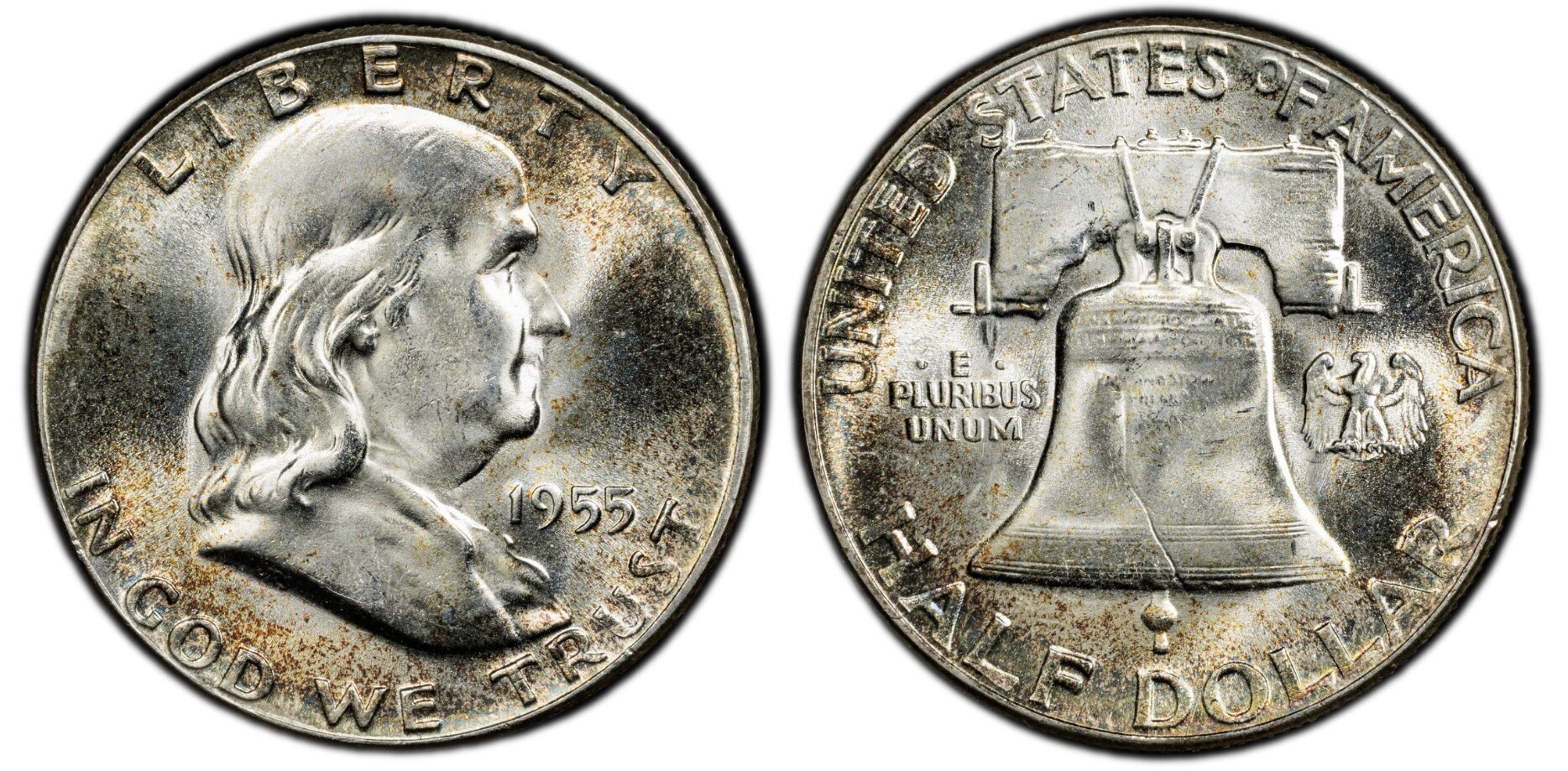
The Bugs Bunny Franklin Half refers to a dramatic die clash error affecting certain 1955 Philadelphia Franklin half dollars, creating the appearance of oversized buck teeth on Benjamin Franklin's portrait. Circulated examples typically trade for $20 to $75, while high-grade specimens can command $200 to $500 or more depending on clash severity and certification. The nickname stems from the resemblance to the famous cartoon character's exaggerated dental features.
 Bugs Bunny Franklin Half Dollar
Among Franklin half dollar varieties, few capture collector imagination quite like the 1955 Bugs Bunny clash error. This dramatic production mistake creates a visual distortion that transforms Franklin's dignified profile into something unexpectedly humorous. The effect results from misaligned dies striking each other without a planchet between them, transferring reverse design elements onto the obverse die face.
When this damaged obverse die subsequently struck coins, portions of the Liberty Bell appeared as raised lines across Franklin's lower face. These transferred elements create the illusion of prominent front teeth protruding from his mouth, earning the variety its memorable nickname. The error demonstrates how mint production mistakes can create collectible varieties that transcend their face value through visual appeal and story value.
The Bugs Bunny Franklin Half represents one example within a broader category of Franklin half dollar errors and varieties that continue attracting specialist collectors. Understanding this specific variety provides insight into die clash errors generally and highlights why certain production mistakes become highly collectible while others remain numismatic footnotes.
Historical Background of Franklin Half Dollars
The Franklin half dollar series entered production in 1948, replacing the Walking Liberty design that had served since 1916. Chief Engraver John R. Sinnock created the design featuring Benjamin Franklin's portrait on the obverse and the Liberty Bell on the reverse, with a small eagle appearing beside the bell to satisfy legal requirements that half dollars display an eagle.
Mint Director Nellie Tayloe Ross championed the series honoring Franklin, one of America's most accomplished Founding Fathers. The design drew some initial criticism for its departure from heroic coin imagery, with Franklin appearing as an elderly statesman rather than an idealized figure. The Liberty Bell placement and relatively small eagle also generated discussion among numismatists and the public.
Production continued through 1963, when President Kennedy's assassination led to the rapid introduction of the Kennedy half dollar in 1964. This gave the Franklin series a relatively short 16-year run compared to many U.S. coin designs. The series' brevity contributes to its modern collectibility, as complete date and mint mark sets remain achievable for most collectors.
Franklin half dollars used 90% silver composition with 10% copper, containing 0.36169 troy ounces of pure silver. This substantial precious metal content provides intrinsic value supporting collector interest even for common dates in lower grades. The combination of silver content, attractive design, and reasonable availability makes Franklin halves popular with both beginning and advanced collectors.
Die Clash Errors: Production and Formation
Die clash errors occur when obverse and reverse dies strike each other without a planchet positioned between them. This direct metal-to-metal contact transfers mirror images of each die's design onto the opposing die face. When these damaged dies subsequently strike coins, the transferred images appear as incuse or raised ghost impressions in areas where they shouldn't exist.
Several factors can cause die clashing. Equipment malfunction, feeding mechanism errors, or planchet positioning problems may allow dies to meet without proper separation. The tremendous pressure involved in coin striking means even brief contact creates permanent damage to die faces. Depending on severity and location, these clash marks may be subtle or dramatically obvious.
Mint quality control procedures typically remove severely clashed dies from production. However, dies with minor clash marks sometimes remain in service, producing coins with varying degrees of clash evidence. The number of coins struck after clashing affects visibility, as die wear gradually reduces transferred image prominence with each additional strike.
The Bugs Bunny Franklin Half represents a particularly dramatic clash where Liberty Bell elements transferred to Franklin's face area. The specific positioning and severity created the distinctive buck-toothed appearance that makes this variety instantly recognizable. Not all 1955 Philadelphia Franklin halves show this error; collectors specifically seek examples with visible clash characteristics.
Identifying the Bugs Bunny Variety
Proper identification requires examining Franklin's portrait area, particularly around and below his mouth. The clash marks appear as raised lines extending from the lip area downward, creating the appearance of oversized protruding teeth. These marks represent portions of the Liberty Bell's vertical lines transferred during the die clash event.
Clash severity varies across affected coins. Strong examples show clear, bold lines that unmistakably resemble prominent front teeth. Weaker examples display subtler marks requiring close examination under magnification. Lighting angle significantly affects visibility, with raking light often revealing details not apparent under direct illumination.
Additional clash evidence may appear elsewhere on affected coins. Observers sometimes notice other transferred design elements in field areas or near design peripheries. However, the facial area clash remains the primary identifying characteristic and the feature responsible for the variety's nickname and collector appeal.
Certification services including PCGS and NGC recognize this variety. Certified examples often include variety attribution on the holder label, specifically noting the Bugs Bunny designation. This authentication provides confidence for buyers and establishes the variety's legitimacy within the numismatic marketplace.
Why Collectors Value the Bugs Bunny Franklin Half
Several factors drive collector interest in this variety. The visual drama creates immediate appeal even for non-specialists. Unlike subtle doubled dies or minor repunched mint marks requiring expertise to appreciate, the Bugs Bunny clash presents obvious character that resonates with collectors at all experience levels.
The nickname itself contributes to collectibility. Memorable variety names help coins achieve recognition beyond specialist circles. The Bugs Bunny designation makes this error accessible and interesting to younger collectors, families, and those attracted to numismatic oddities rather than traditional rarity alone.
Story value matters significantly in error coin collecting. Pieces that demonstrate production realities and reveal how mistakes occur educate collectors about minting processes while providing conversation pieces that generate interest. The Bugs Bunny variety accomplishes both objectives effectively.
Relative scarcity compared to normal 1955 Philadelphia halves adds value. While not extremely rare, the variety represents a small fraction of total mintage. This achievable scarcity creates collecting opportunities without requiring extraordinary financial commitment, particularly for circulated examples.
Other Notable Franklin Half Dollar Varieties and Errors
The Franklin series includes numerous collectible varieties beyond the Bugs Bunny clash. Understanding the broader variety landscape helps collectors appreciate what makes certain errors significant and guides collecting strategy for those interested in Franklin specialists.
1955 Doubled Die Obverse
The same year that produced the Bugs Bunny variety also saw a significant doubled die obverse. This variety shows doubling on IN GOD WE TRUST and LIBERTY, with varying degrees of separation visible depending on specific die stage. Strong examples command premiums proportional to doubling visibility and overall coin grade.
Full Bell Lines Designation
While not technically an error, the Full Bell Lines designation represents an important quality factor within Franklin collecting. The horizontal lines across the Liberty Bell's lower portion prove difficult to strike completely. Examples showing full, unbroken lines across all horizontal registers receive FBL designation from major grading services, commanding substantial premiums over non-FBL counterparts in the same numerical grade.
1953 Doubled Die Obverse
Multiple doubled die varieties affect 1953 Franklin halves. These show varying degrees of doubling on obverse lettering, particularly in LIBERTY and the date. Specialist collectors pursue different die varieties within this date, creating niche collecting opportunities for those interested in attribution work.
1961 Proof Type 1 and Type 2
Proof 1961 Franklin halves exist with two different reverse types. Type 1 reverses show more pronounced designer initials, while Type 2 examples display less prominent initials. This mid-year modification creates two collectible varieties from a single date, with Type 1 examples generally scarcer and more valuable.
Die Cracks and Cuds
Various dates show collectible die cracks, breaks, and cuds. These occur when dies develop fractures from metal fatigue, creating raised lines or blobs of metal on resulting coins. Major cuds showing significant raised areas command attention from error specialists, while minor cracks provide affordable variety collecting opportunities.
Off-Center Strikes
Franklin halves occasionally appear with off-center strikes, where the planchet was improperly positioned during striking. Examples showing 5% to 15% off-center with full date visibility typically prove most collectible, balancing error drama with identifiability. More extreme off-center strikes also exist but may sacrifice recognition for error severity.
Wrong Planchet Errors
Documented cases exist of Franklin half dollar dies striking planchets intended for other denominations. These dramatic errors include strikes on quarter and foreign planchets. Such pieces remain quite rare and command significant premiums when authenticated, though collectors should exercise caution as wrong planchet errors face counterfeiting attempts.
Grading Considerations for Franklin Varieties
Grading Franklin half dollars requires attention to specific wear points and strike characteristics. Franklin's cheek represents the highest relief area and shows wear first, followed by hair above the ear. On the reverse, the Liberty Bell's horizontal lines wear quickly, making Full Bell Lines designation difficult to achieve even on lightly circulated examples.
For the Bugs Bunny variety specifically, clash mark visibility affects desirability independent of numerical grade. A lower-grade piece with bold, clear clash marks may appeal more to variety collectors than a higher-grade example with weak clash evidence. This creates interesting market dynamics where traditional grade-value relationships become more nuanced.
Surface preservation matters significantly for silver coins. Franklin halves commonly develop toning from decades of storage in various environments. Attractive original toning can enhance value, while unattractive dark or spotted toning may reduce appeal even on otherwise high-grade pieces. Eye appeal represents a subjective but important grading factor.