

1916-S Wheat Penny Value: Rarity, History, and Auction Sales
Posted by Andrew Adamo - A certified ANA Professional Numismatist, Active member of ICTA, contributor to CoinWeek, Numismatic News, NGC and ANA on Jul 21st 2026
1916-S Wheat Penny Value: Rarity, History, and Auction Sales
The 1916-S Wheat Penny typically ranges from $10 to $30 in circulated grades, while uncirculated examples can command $100 to $400 or more depending on condition. In top grades, certified MS67 Red specimens have sold for over $20,000 at major auctions, reflecting the exceptional challenge of finding this San Francisco issue with full original color and eye appeal.
Collector Overview: Understanding the 1916-S Wheat Penny
The 1916-S Wheat Penny represents a moderately scarce date within the Lincoln Cent series, appealing to collectors who pursue complete date-and-mintmark sets. Struck at the San Francisco Mint during a period of widespread coin usage and limited numismatic awareness, most examples entered circulation immediately and saw decades of use before collectors began saving them.
While not among the most famous rarities in the series, the 1916-S holds an important position in Lincoln Cent collecting. Its mintage was modest compared to Philadelphia issues, and high-grade survivors with full original red color remain elusive. Collectors working on complete date sets, San Francisco Mint collections, or condition-focused registry sets pay attention to this date because quality examples require patience to locate.
Understanding the factors that influence 1916-S Wheat Penny value helps collectors make informed decisions when evaluating potential purchases. Condition, color designation, strike quality, and certification all play significant roles in determining what a particular example might bring in today's market.
Historical Background: The Lincoln Cent in 1916
The Lincoln Cent series began in 1909, replacing the long-running Indian Head Cent design. By 1916, the series was entering its eighth year of production, and the novelty of the coin had worn off among the general public. Most Americans used pennies in everyday commerce without considering their potential future value, meaning that few coins were preserved in mint state condition.
The year 1916 marked an interesting period in American history. The nation was watching European events unfold during World War I, though the United States had not yet entered the conflict. The economy was growing, and coin production reflected the needs of commerce across the country. Three mints produced Lincoln Cents that year: Philadelphia, Denver, and San Francisco.
Victor David Brenner's design remained unchanged from the series debut. The obverse featured a portrait of Abraham Lincoln, while the reverse displayed two wheat stalks framing the denomination and country name. This design would continue through 1958, earning the series its "Wheat Penny" or "Wheat Cent" nickname among collectors.
San Francisco Mint Production Context
The San Francisco Mint had been producing coins since the Gold Rush era, and by 1916, it was a well-established branch facility. The mint's primary focus often centered on precious metal coinage, but it also struck bronze cents when demand required. Production quality at San Francisco varied depending on die condition, planchet quality, and the attention given to striking pressure during the minting process.
Coins struck at San Francisco bear the "S" mintmark, located below the date on the obverse. This small letter identifies the coin's origin and becomes a critical factor for collectors assembling complete sets. The presence of the mintmark makes the difference between a common date and a more challenging piece to obtain in certain grades.
Why Collectors Value the 1916-S Wheat Penny
Several factors drive collector interest in the 1916-S Wheat Penny. While it does not carry the extreme rarity of key dates like the 1909-S VDB or the 1914-D, it occupies an important middle ground that appeals to serious date-set collectors who want a complete representation of the series without pursuing only the most famous rarities.
Collectors working on Lincoln Cent albums or folders need this date to fill the designated slot. The coin represents a specific year and mint combination that cannot be substituted with any other issue. This demand creates consistent interest across all grade levels, from well-worn examples to high-grade mint state pieces.
The challenge of finding the 1916-S in full red uncirculated condition adds another dimension to its collectibility. Copper coins are prone to darkening over time as the metal oxidizes naturally. Examples that retain full original red color command significant premiums because they represent exceptional preservation over more than a century.
Appeal to Different Collector Types
Budget-conscious collectors can acquire circulated examples at reasonable prices, making the 1916-S accessible for those building date sets without requiring top-grade specimens. Intermediate collectors often target examples in Extra Fine or About Uncirculated grades, where the coin shows clear design details while remaining affordable.
Advanced collectors and registry set participants pursue certified mint state examples, particularly those designated as Red by grading services. These specimens become competitive assets in registry competitions where points are awarded based on grade and eye appeal. The relative scarcity of MS-66 and MS-67 Red examples makes them particularly desirable among condition-focused collectors.
Design, Specifications, and Identifying Details
The 1916-S Wheat Penny follows the standard specifications established for the Lincoln Cent series. Understanding these details helps collectors properly identify and evaluate examples they encounter.
Physical Specifications
The coin measures 19 millimeters in diameter and has a plain edge without reeding. The composition consists of 95% copper and 5% tin and zinc, giving the coin its characteristic bronze color when newly minted. The weight is 3.11 grams, consistent across all Lincoln Cents of this era.
These bronze planchets were produced to exacting standards, though minor variations in planchet quality sometimes resulted in subtle differences in strike quality or surface texture. Collectors examining examples should look for even color and surface consistency, which indicates proper planchet preparation and striking.
Obverse Design Elements
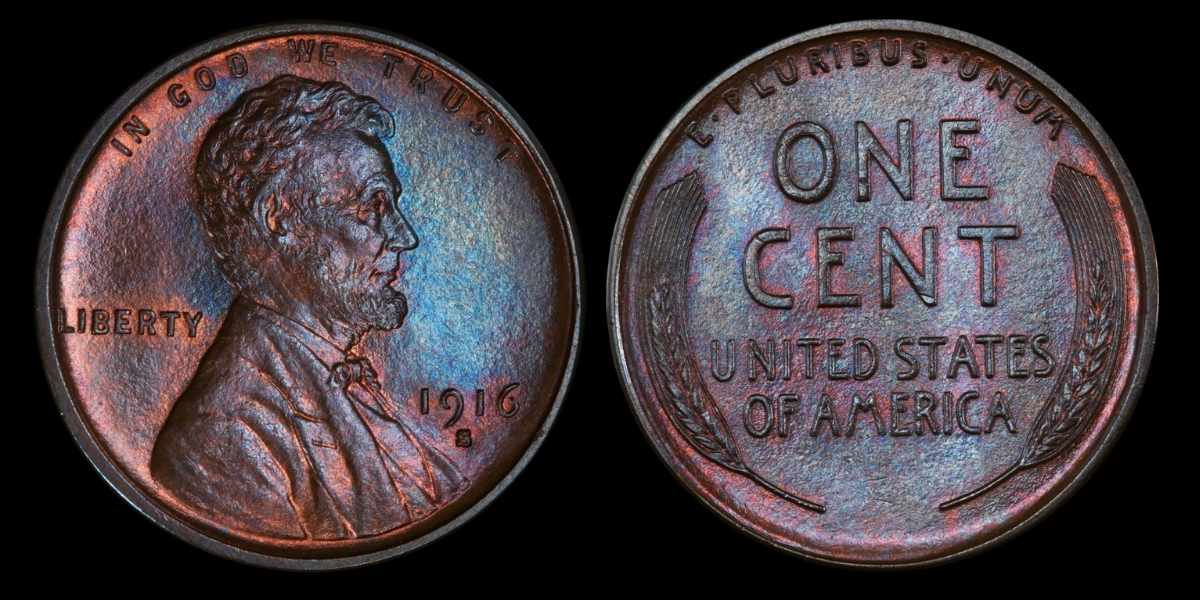
Victor David Brenner's portrait of Abraham Lincoln appears on the obverse, facing right. The portrait captures Lincoln's distinctive features with remarkable detail, from his facial structure to the texture of his hair and beard. The designer's initials, VDB, appear in small letters at the shoulder cutoff on cents struck from 1918 forward, though they were absent in 1916.
The word LIBERTY appears along the upper right edge, while the date 1916 is positioned below the portrait. The motto IN GOD WE TRUST arcs above Lincoln's head. Most importantly for this issue, the S mintmark sits below the date, identifying the coin as a San Francisco product.
Reverse Design Elements
The reverse displays two wheat stalks, one on each side of the central design space. The denomination ONE CENT appears in the center, with UNITED STATES OF AMERICA arching above. The motto E PLURIBUS UNUM curves across the upper portion of the coin between the wheat stalks.
The wheat stalks show fine detail when properly struck, with individual grain heads visible under magnification. Well-preserved examples display sharp definition in these areas, while worn pieces show flattening and loss of detail, particularly in the center wheat grains and the tops of the stalks.
Rarity, Mintage, and Availability
The San Francisco Mint struck 22,510,000 Lincoln Cents in 1916, a moderate production figure that places the issue in the middle range of availability. This mintage was substantially lower than Philadelphia's production but higher than Denver's output for the same year. The number indicates sufficient production for commercial needs while creating long-term scarcity in high grades.
Most of these coins entered immediate circulation and remained in use for years or decades. Few collectors were actively saving mint state pennies in 1916, meaning that uncirculated examples surviving today often come from small hoards or bank rolls that were preserved by chance rather than intentional collecting activity.
Population and Survival Rates
The survival rate in mint state condition is modest. While thousands of circulated examples exist, the number of uncirculated coins represents a tiny fraction of the original mintage. Certification services have graded numerous examples over the decades, but high-grade Red specimens remain genuinely scarce.
In circulated grades from Good through Extra Fine, the 1916-S appears with reasonable frequency in the marketplace. Collectors seeking examples for date sets can usually locate suitable pieces without excessive difficulty. The challenge increases dramatically when pursuing uncirculated examples, particularly those grading MS-65 Red or higher.
Market Availability Patterns
Coin shows, online marketplaces, auction houses, and dealer inventories all offer opportunities to acquire 1916-S Wheat Pennies. Lower-grade examples appear frequently, while mint state coins surface less often. Collectors targeting specific grade levels may need to wait for appropriate examples to become available or work with dealers who can source particular quality standards.
The coin's moderate rarity means it doesn't generate the intense competition seen with key dates, but quality examples still attract multiple interested buyers when offered at auction or through dealer listings. Understanding current market conditions helps collectors evaluate whether a particular asking price represents fair value.
Grading and Condition Factors
Accurately assessing the grade of a 1916-S Wheat Penny requires understanding how wear affects the design and how grading services evaluate these coins. Different grade levels reflect specific characteristics that collectors should recognize.
Circulated Grade Characteristics
In Good condition, the coin shows heavy wear with the rim merged into the lettering in some areas. Lincoln's portrait is visible but significantly flattened, and many fine details are lost. The wheat stalks on the reverse show substantial wear with most grain detail gone. These coins are affordable and suitable for basic date-set completion.
Fine grade examples display moderate wear with Lincoln's major features clear but softened. The rim is fully separated from the lettering, and the ear shows some detail. The wheat stalks retain partial grain definition at the centers. These coins offer better eye appeal than Good examples while remaining budget-friendly.
Very Fine pieces show light to moderate wear, with Lincoln's hair detail partially visible and the jawline well-defined. The wheat stalks display most of their original detail, with clear grain separation. These coins often represent excellent value for collectors who want strong design clarity without paying mint state premiums.