

1912 Wheat Penny Value: History, Rarity, and Auction Sales
Posted by Andrew Adamo - A certified ANA Professional Numismatist, Active member of ICTA, contributor to CoinWeek, Numismatic News, NGC and ANA on May 6th 2026
1912 Wheat Penny Value: History, Rarity, and Auction Sales
The 1912 Wheat Penny value ranges from approximately $1 to $3 in circulated condition, while uncirculated examples can command $15 to $50 or more depending on grade and mint mark. The highest recorded auction sale for a 1912 Wheat Penny reached $21,850 in premium gem condition, with specimens graded MS67 Red by professional services achieving significant collector interest at major numismatic auctions.
Executive Overview
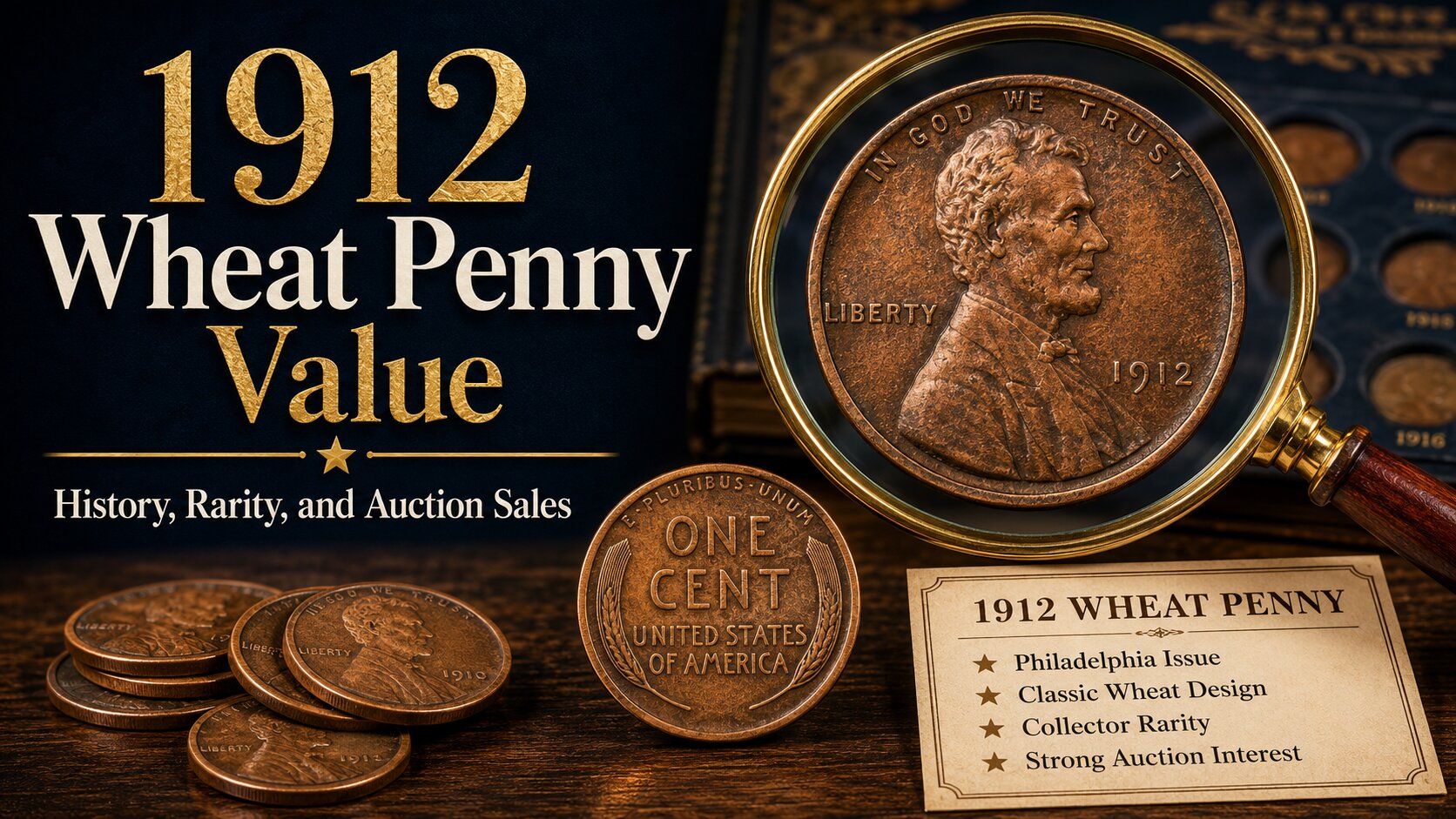
The 1912 Wheat Penny represents a fascinating chapter in early Lincoln cent production, issued during an era when the coin's design was still relatively new. Struck at three mints, Philadelphia, Denver, and San Francisco, this date offers collectors multiple varieties to pursue, each with distinct availability and demand characteristics. Understanding the differences between mint marks, recognizing condition factors, and evaluating strike quality are essential skills for collectors seeking to acquire these century-old cents at appropriate market values.
This report examines the historical context, design elements, rarity considerations, grading factors, and market dynamics that influence 1912 Wheat Penny values today. Whether you're building a date-and-mintmark set, pursuing high-grade type coins, or simply curious about early Lincoln cents, the information presented here provides practical guidance for making informed collecting decisions.
AUCTION RECORD: $21,850 • MS67 • 08-01-2006
Historical Background and Production Context
The Lincoln Wheat Penny debuted in 1909 to commemorate the centennial of Abraham Lincoln's birth, making it the first circulating U.S. coin to feature a real historical figure. By 1912, the design had been in production for just three years, yet it had already become a familiar sight in everyday commerce. The coin represented a significant departure from the Indian Head cent it replaced, both in artistic approach and symbolic meaning.
Victor David Brenner's obverse design featured a right-facing portrait of Lincoln based on a photograph taken by Matthew Brady in 1864. The reverse displayed two wheat stalks framing the denomination, giving the series its enduring nickname. In 1912, the coin was struck at all three operating mints, providing collectors with the Philadelphia, Denver, and San Francisco issues that form the foundation of complete date-and-mintmark sets.
Production occurred during a period of steady economic activity in the United States, with cents circulating heavily in day-to-day transactions. The 1912 issues entered commerce during the final year of President William Howard Taft's administration, months before Woodrow Wilson's election would reshape American political life. These coins witnessed the nation's transition into the modern era, passing through countless hands as the country moved toward increased industrialization and global engagement.
Why Collectors Value 1912 Wheat Pennies
Several factors drive collector interest in 1912 Wheat Pennies beyond their historical significance. The date represents an accessible entry point for collectors building early Lincoln cent sets, offering genuine century-old coins at reasonable prices in most grades. The three mint marks provide variety without requiring enormous financial commitments, making complete year sets achievable for collectors with moderate budgets.
Condition-sensitive collectors particularly appreciate well-preserved examples that retain original mint luster and sharp design details. High-grade specimens with full red color demonstrate impressive eye appeal when properly preserved, commanding premium prices relative to their more common circulated counterparts. The challenge of locating problem-free examples with strong strikes and attractive surfaces adds an element of pursuit that many collectors find rewarding.
The 1912 date also appeals to type collectors seeking representative examples of early Wheat Penny production. Coins from this era exhibit subtle manufacturing characteristics that distinguish them from later issues, including die finish techniques, planchet preparation methods, and striking practices that evolved throughout the series' sixty-year lifespan. Serious numismatists study these production details to better understand how U.S. Mint operations developed during the early twentieth century.
Design Elements and Physical Specifications
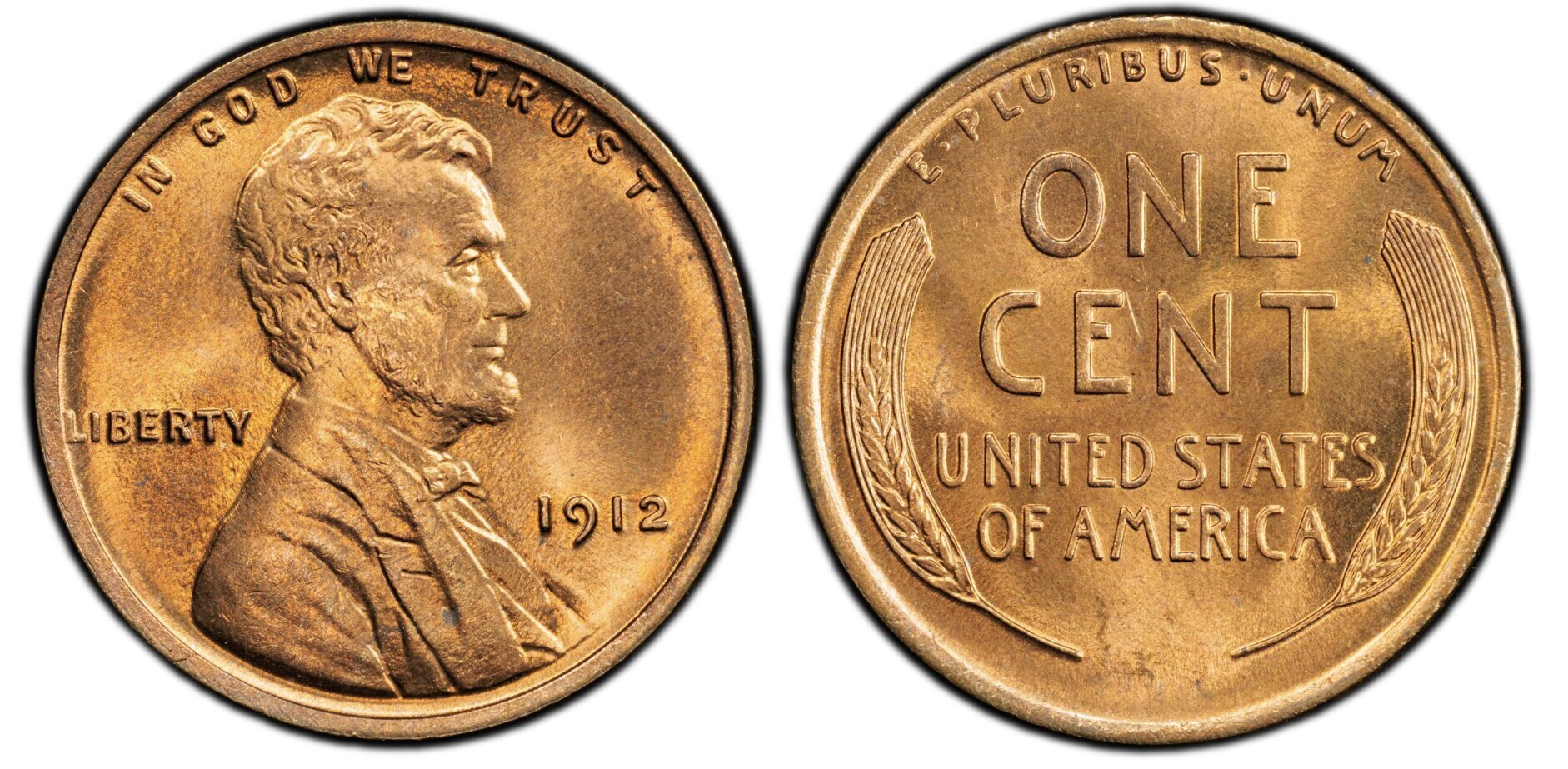
The 1912 Wheat Penny maintained the design specifications established when the Lincoln cent series began. The obverse features Lincoln's portrait facing right, with "IN GOD WE TRUST" positioned above the president's head, "LIBERTY" along the left edge, and the date "1912" to the right of the portrait. Victor David Brenner's original design conveyed dignity and solemnity appropriate for honoring the nation's sixteenth president.
On the reverse, two wheat stalks frame "ONE CENT" and "UNITED STATES OF AMERICA," with "E PLURIBUS UNUM" centered near the top. The composition consisted of 95% copper and 5% tin and zinc, creating the bronze appearance characteristic of Wheat Pennies struck before the wartime composition changes of 1943. Each coin weighed 3.11 grams and measured 19 millimeters in diameter.
Mint marks appear on the obverse beneath the date when present. Philadelphia coins bear no mint mark, while Denver issues display a small "D" and San Francisco coins show an "S" in that location. These small letters are crucial for proper attribution, as mint mark presence significantly affects both rarity and market value across the 1912 issues.
Mintage Figures and Relative Availability
The Philadelphia Mint produced the largest quantity of 1912 cents, striking more than 68 million examples for circulation. This substantial mintage makes the 1912 Philadelphia issue readily available in circulated grades, though high-grade uncirculated specimens with full original red color remain relatively scarce due to the challenges of preserving copper coins for over a century.
The 1912-D penny saw more limited production at the Denver Mint, with mintage figures significantly lower than the Philadelphia issue. This reduced production contributes to greater scarcity in all grades, particularly at higher levels of preservation. Collectors seeking well-struck examples with strong luster often face challenges locating premium-quality specimens that meet rigorous grading standards.
San Francisco contributed the lowest mintage among the three 1912 varieties, making the 1912-S penny the key date for the year. While not rare in absolute terms, the 1912-S presents greater difficulty for collectors seeking choice uncirculated examples. Many surviving specimens show evidence of circulation or storage-related impairments that affect their numismatic appeal and market value.
Grading Considerations and Condition Factors
Evaluating the condition of 1912 Wheat Pennies requires careful attention to several critical areas where wear first appears and where manufacturing characteristics affect overall appeal. On the obverse, Lincoln's cheekbone, jaw, and hair details provide primary indicators of circulation. Uncirculated coins display complete definition in these areas, with no evidence of metal displacement from handling or use.
The wheat stalks on the reverse show wear most noticeably at their centers, where high points first lose detail through circulation. Well-preserved examples maintain full separation of individual wheat grains and sharp definition throughout both stalks. Strike quality varies among 1912 cents, with some examples showing incomplete detail even in uncirculated condition due to die wear or insufficient striking pressure.
Color designation plays a crucial role in grading uncirculated Wheat Pennies. Full red specimens retain the original mint color with minimal darkening or toning, typically commanding significant premiums over red-brown or brown examples. The copper composition makes these coins susceptible to environmental exposure, and true red survivors become increasingly scarce as decades pass. Surface preservation matters equally, as spots, stains, scratches, or cleaning damage can dramatically reduce collector appeal regardless of technical grade.
Professional certification by services like PCGS or NGC provides standardized grading opinions and holder protection, helping collectors make informed purchasing decisions. Certified examples offer assurance regarding authenticity and condition, particularly important for higher-grade specimens where subtle differences in preservation translate into substantial value variations. Population reports from these services provide useful context regarding relative rarity at different grade levels.
Value Factors and Market Dynamics
Multiple variables influence 1912 Wheat Penny values in today's numismatic marketplace. Mint mark presence stands as the most fundamental factor, with San Francisco issues typically commanding premiums over Denver coins, which in turn exceed Philadelphia examples at comparable grade levels. This hierarchy reflects relative scarcity and collector demand patterns established over decades of numismatic market activity.
Grade significantly affects value, particularly at uncirculated levels where condition variations translate into meaningful price differences. A coin grading MS-63 may trade for a fraction of an MS-66 example's value, reflecting the rarity of premium preservation and the aesthetic appeal of higher-grade specimens. Coins with full red color designation command substantial premiums over red-brown or brown examples at equivalent grade levels.
Strike quality influences desirability among discerning collectors who prioritize completeness of design detail. Well-struck examples with sharp wheat grains and clear Lincoln portrait details attract greater interest than weakly struck coins showing incomplete definition even in uncirculated condition. Eye appeal factors including luster quality, surface cleanliness, and toning characteristics also affect market reception and realized prices.
Market conditions fluctuate based on broader collector interest in early Lincoln cents, precious metals pricing that affects base metal numismatic items indirectly, and generational collecting patterns. Coins with provenance from notable collections sometimes achieve premiums reflecting their ownership history, though this factor applies primarily to exceptional specimens rather than typical circulated examples.
Authentication and Problem Detection
While 1912 Wheat Pennies are not typically targeted for counterfeiting due to their modest values in most grades, collectors should remain alert to several potential issues. Altered dates, where common dates are modified to resemble scarcer issues, represent the primary authentication concern. Examining digits under magnification helps detect tooling marks or inconsistencies in number style that indicate alteration.
Mint mark additions or removals pose greater risks with early Lincoln cents than with many later issues. Comparing mint mark size, style, and position against authenticated examples helps identify fraudulent modifications. Professional certification provides protection against these alterations for coins warranting the grading service fees relative to their values.
Environmental damage often affects century-old copper coins, with problems ranging from corrosion and verdigris to cleaning attempts that leave telltale hairlines or unnatural coloration. Collectors should carefully examine surfaces for evidence of improper conservation efforts, which significantly reduce numismatic value even when coins retain technical sharpness. Natural toning follows predictable patterns, while artificial toning or recoloring shows irregular characteristics that careful examination can reveal.
Collector Evaluation Checklist
When assessing 1912 Wheat Pennies for potential acquisition, collectors benefit from systematic evaluation covering several key areas:
- Verify mint mark authenticity and proper positioning beneath the date
- Examine Lincoln's portrait for completeness of detail, particularly in hair and facial features
- Check wheat stalks for full definition and separation of individual grains
- Assess surface preservation for spots, stains, scratches, or cleaning evidence
- Evaluate color designation, noting whether red, red-brown, or brown classification applies
- Consider strike quality, particularly at design high points where weakness sometimes appears
- Review eye appeal including luster quality, toning characteristics, and overall visual presentation
- Compare asking prices against recent auction results and dealer listings for comparable examples