

1911-S Wheat Penny Value: San Francisco Rarity, History, and Auctions
Posted by Andrew Adamo - A certified ANA Professional Numismatist, Active member of ICTA, contributor to CoinWeek, Numismatic News, NGC and ANA on May 6th 2026
1911-S Wheat Penny Value
The 1911-S Wheat Penny value ranges from approximately $30 in Good condition to over $1,000 in MS65 and higher grades, with exceptional specimens commanding significantly more among advanced collectors. This San Francisco issue represents one of the lower-mintage early Lincoln cents, making it a key date in circulated and uncirculated grades for serious numismatists building complete sets.
Executive Overview: What Collectors Should Know
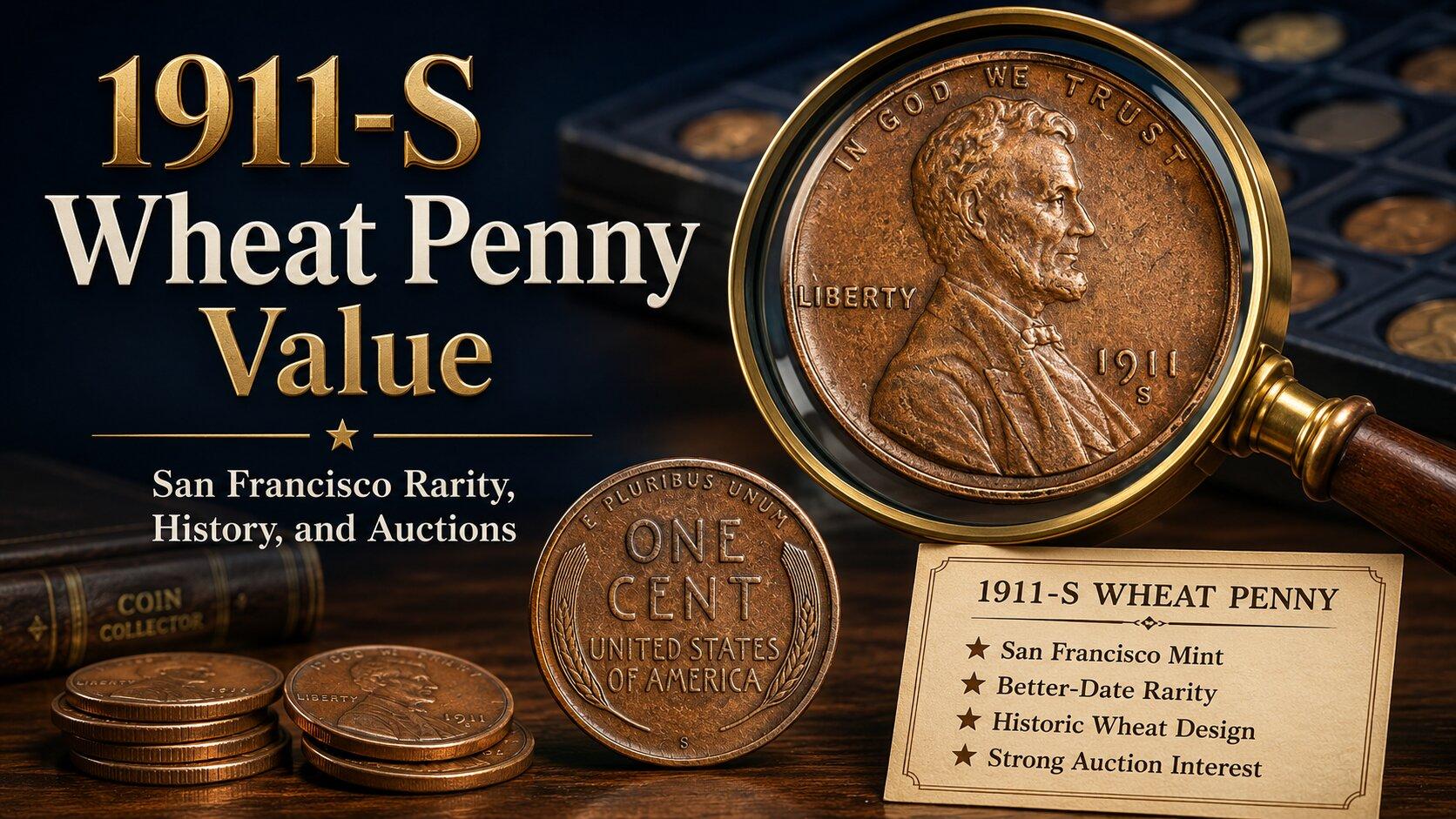
The 1911-S Lincoln Wheat cent holds particular significance in the early Lincoln cent series as a lower-production San Francisco issue from only the third year of the series. While not as legendary as the 1909-S VDB or 1914-D, the 1911-S presents meaningful challenges for collectors seeking higher-grade examples with strong eye appeal. The coin's relative scarcity in strictly uncirculated condition, combined with its position in the early Wheat cent timeline, creates steady collector demand across all grades. For those assembling date-and-mintmark sets or pursuing early San Francisco Lincoln cents, this issue represents both an attainable challenge in circulated grades and a significant achievement when located in gem condition.
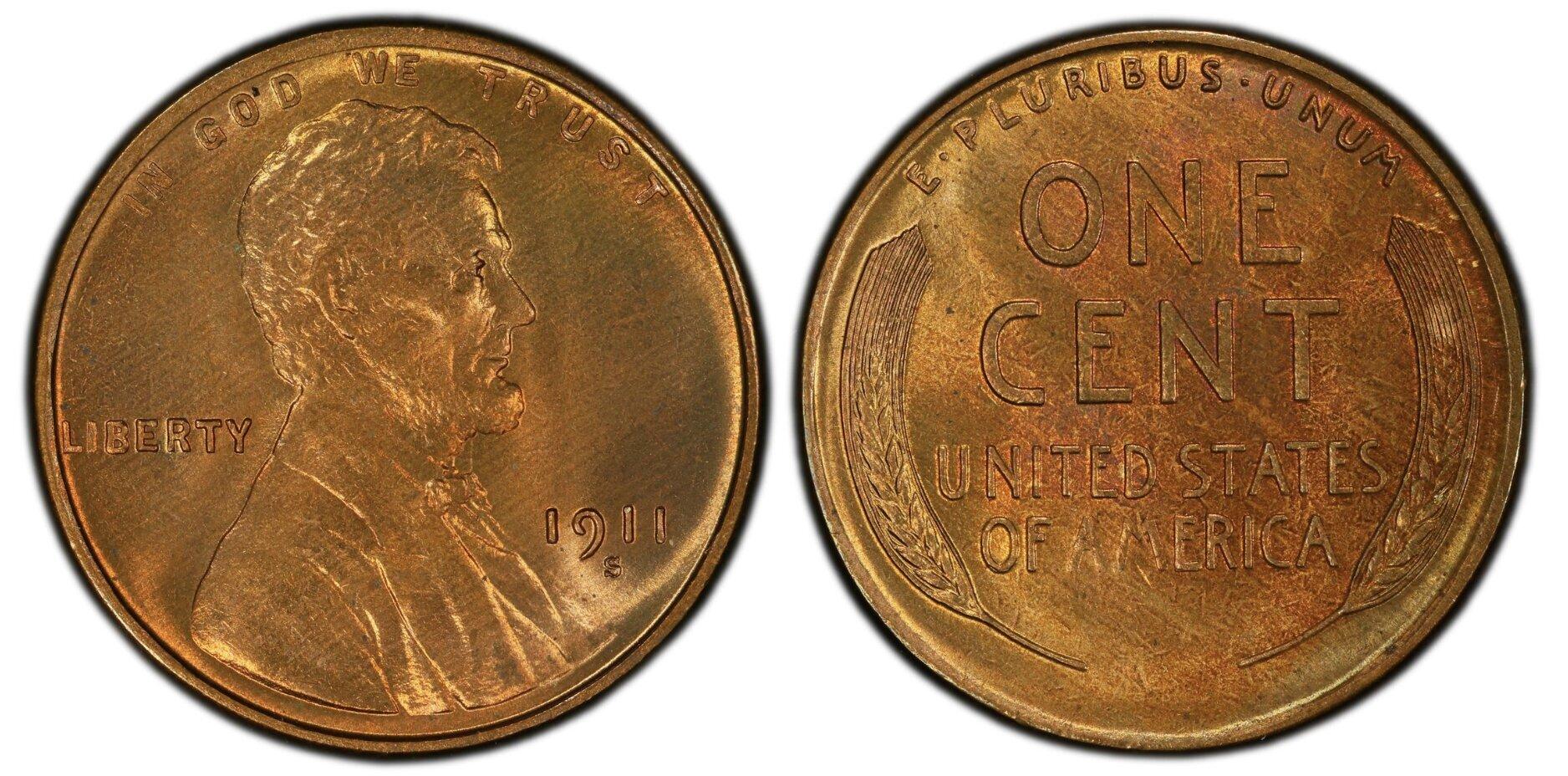
AUCTION RECORD: $3,840 • MS66RB • 11-20-2019
Historical Background: Early Lincoln Cents and San Francisco Production
The Lincoln cent debuted in 1909 to commemorate the centennial of Abraham Lincoln's birth, replacing the long-running Indian Head cent. Designed by Victor David Brenner, the coin marked the first time a historical figure appeared on a regular-issue U.S. circulating coin. The obverse features Lincoln's profile, while the reverse displays two wheat stalks flanking the denomination and country name, giving the series its popular "Wheat cent" nickname.
By 1911, the Lincoln cent series was in its third year of production. The San Francisco Mint struck coins for circulation serving the western United States, and its production numbers for cents were typically lower than Philadelphia's output. The San Francisco Mint, established during the California Gold Rush era, had become an important facility for producing circulating coinage for the growing western population and economy.
The 1911-S represents an early San Francisco Lincoln cent from an era when the series was still relatively new to American commerce. Collectors during this period were just beginning to appreciate saving coins by date and mintmark, though systematic collecting practices were less widespread than they would become in later decades. Most 1911-S cents entered circulation and remained there for years, resulting in considerable wear on surviving examples.
Why Collectors Pay Attention to the 1911-S
Several factors drive collector interest in the 1911-S Wheat Penny. First, it represents an early-date San Francisco issue in a widely collected series. Lincoln cents remain among the most popular U.S. coin series, with millions of collectors pursuing date-and-mintmark sets ranging from affordable circulated examples to high-grade specimens.
The 1911-S occupies an interesting position between the celebrated key dates of the early teens and the more common issues. While more available than the 1909-S VDB, 1914-D, or 1931-S, the 1911-S still presents meaningful scarcity in uncirculated grades. This balance makes it appealing to collectors who want substantial coins without entering five-figure territory.
Higher-grade examples with original surfaces and strong eye appeal command significant premiums. Well-preserved 1911-S cents with full red or red-brown color, sharp strikes, and minimal surface disturbances attract competitive bidding among advanced collectors and registry set participants. The coin's age and survival rate in true gem condition create supply limitations that support sustained demand.
Design, Specifications, and Identifying Details
The 1911-S Lincoln Wheat cent shares the standard specifications of all Lincoln cents from this era. The coin measures 19mm in diameter and weighs 3.11 grams. The composition is 95% copper and 5% tin and zinc, giving the coins their characteristic bronze appearance when newly minted.
Victor David Brenner's obverse design features Abraham Lincoln's right-facing profile with the word "LIBERTY" behind his head and the date "1911" in front. Brenner's initials, "VDB," appear on some Lincoln cents but were removed after controversy in 1909 and not restored to the obverse until 1918, when they were placed on the truncation of Lincoln's shoulder.
The reverse displays two wheat stalks framing the inscriptions "ONE CENT" and "UNITED STATES OF AMERICA," with "E PLURIBUS UNUM" above. The mintmark "S" appears below the date on the obverse, between the date and the rim. This small letter identifies the coin as a San Francisco product and is the critical detail distinguishing it from 1911 Philadelphia cents, which carry no mintmark.
Identifying an authentic 1911-S requires examining the mintmark placement and ensuring the coin matches the proper design specifications for the period. Altered dates or added mintmarks represent potential authentication concerns, making certification valuable for higher-grade examples.
Rarity, Mintage, and Availability
The San Francisco Mint produced fewer 1911-S cents compared to Philadelphia's output for that year. The lower mintage contributes to the coin's status as a scarcer issue within the Lincoln cent series, though exact survival rates vary significantly by grade.
In circulated grades ranging from Good through Extremely Fine, the 1911-S remains obtainable with patient searching. Many examples show typical circulation wear including loss of detail in Lincoln's hair, cheek, and the wheat stalks on the reverse. Coins in these grades serve well for collectors building affordable date-and-mintmark sets focused on completion rather than condition.
Availability becomes considerably more restricted in About Uncirculated and Mint State grades. True uncirculated examples with full original mint luster and minimal contact marks are scarce. Many purported uncirculated 1911-S cents have been cleaned, retoned, or show friction on the high points that technically places them in AU grades rather than true Mint State.
At the gem level (MS65 and higher), the 1911-S becomes genuinely scarce. Examples with full red surfaces or attractive red-brown coloration, sharp strikes, and excellent eye appeal are pursued aggressively by advanced collectors and registry set participants. Population reports from major grading services reflect this scarcity, with relatively small numbers certified in the highest grades.
Grading and Condition Factors
Understanding grading considerations helps collectors evaluate 1911-S Wheat Pennies accurately and avoid overpaying for misrepresented condition. The coin's age and circulation history mean that most survivors show varying degrees of wear.
In circulated grades, wear first appears on the high points of Lincoln's cheek and jaw, the wheat stalks on the reverse, and the lettering. Good through Very Good examples show considerable flattening of these areas with readable dates and legends. Fine and Very Fine examples retain more detail in Lincoln's hair and the wheat stalks while still showing obvious circulation wear. Extremely Fine specimens exhibit light wear on the highest points with most design details remaining sharp and clear.
About Uncirculated grades capture coins with only slight friction on the highest design elements and most of the original mint luster intact. Distinguishing between high-end AU and low-end Mint State requires careful examination of surfaces and luster characteristics. Professional certification provides valuable third-party opinions on these borderline grades.
Mint State 1911-S cents are evaluated on several factors beyond the absence of wear. Strike quality varies, with some examples showing weakness in certain design elements from die conditions or striking pressure. Surface preservation matters significantly, as contact marks, scratches, or spotting reduce eye appeal and grade. Original color also influences value, with full red examples (maintaining original mint color) commanding premiums over red-brown or brown specimens.
Certification by PCGS, NGC, or other recognized grading services adds confidence when purchasing higher-grade 1911-S cents. Third-party grading provides authentication, grade consensus, and holder protection while creating standardized comparisons across the marketplace.
Value Factors and Market Context
Multiple elements influence what collectors may encounter when researching 1911-S penny value. Grade remains the primary determinant, with dramatic price differences between circulated and uncirculated examples and further distinctions within Mint State levels.
Surface quality and eye appeal create significant premiums within the same numerical grade. A lustrous, well-struck MS64 with attractive toning and minimal distractions commands more collector interest than a technically MS64 example with heavy contact marks or uneven surfaces. Original color status matters particularly in higher Mint State grades, where full red specimens bring substantial premiums over red-brown or brown examples.
Certification status affects marketability and pricing. Coins graded by major services like PCGS or NGC typically trade at higher levels than raw examples due to authentication assurance and grade consensus. Population reports showing relative scarcity in specific grades also influence collector competition and pricing dynamics.
Market conditions and collector demand fluctuate over time. Strong interest in Lincoln cent varieties and early dates can strengthen prices, while broader economic conditions or hobby trends may influence short-term pricing. Long-term value trends for scarce early Lincoln cents in high grades have generally reflected sustained collector interest, though individual transactions vary based on timing, venue, and specific coin characteristics.
Collector Evaluation Checklist
When assessing a 1911-S Wheat Penny, consider these practical points:
- Verify the "S" mintmark appears below the date on the obverse and matches period characteristics
- Examine surfaces carefully for signs of cleaning, retoning, or environmental damage that reduces value
- Evaluate strike quality by checking sharpness in Lincoln's hair details and wheat stalk definition
- Assess eye appeal including color, luster retention, and absence of distracting marks
- Consider certification for any coin in AU or higher grades to ensure authentication and grade accuracy
- Review population data to understand relative scarcity in specific grades
- Compare asking prices across multiple sources to establish reasonable market ranges
- Inspect holder integrity and grading service reputation when purchasing certified examples
Comparison with Related Early Lincoln Cents
Understanding how the 1911-S fits among related Lincoln cents provides useful collecting context. The 1909-S VDB stands as the series' most celebrated key date, commanding substantially higher prices across all grades due to its famous designer controversy and low mintage. The 1914-D represents another major key date with strong demand and premium pricing exceeding the 1911-S.
Among other early San Francisco issues, the 1911-S compares favorably in terms of challenge and affordability balance. The 1910-S and 1912-S present similar collecting opportunities, while the 1913-S continues the pattern of scarcer San Francisco production. The 1915-S saw higher mintage and remains more available in most grades.
For collectors building complete date-and-mintmark sets, the 1911-S occupies an intermediate difficulty tier. It presents more challenge than later teens and twenties dates but remains more attainable than the major key dates. This positioning makes it an important milestone for collectors advancing beyond common dates toward comprehensive Lincoln cent collections.