

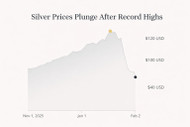
Silver Price Drop on January 30th, 2026 Explained. Historic One-Day Drop!
Posted by A certified ANA Professional Numismatist, Active member of ICTA, contributor to CoinWeek, Numismatic News, NGC and ANA on Feb 2nd 2026
On January 30, 2026, the U.S. President announced his nomination of Kevin Warsh as the next Federal Reserve Chair. Warsh is widely viewed as more hawkish than many investors expected, meaning markets assumed he might favor higher interest rates or stronger monetary policy. That expectation quickly reshaped investor sentiment across financial markets. Precious metals, which often rise when interest rates are expected to stay low and the dollar weakens, were hit especially hard.
This news triggered big shifts:
-
The U.S. dollar strengthened, which typically reduces demand for non-yielding assets like silver.
-
Investors rapidly reassessed the outlook for inflation and monetary policy, leading many to exit positions in gold and silver.

Forced Selling, Margin Calls & Technical Unwinding
Silver markets were already crowded with leveraged positions (traders borrowing to buy more metal futures). When prices began dropping, exchanges, including the CME Group, raised margin requirements, forcing traders to inject more capital or liquidate positions. That accelerated selling as leveraged traders were squeezed out of their markets.
This created a cascade effect:
-
Traders selling to cover losses pushed prices down faster.
-
Stop-loss orders and technical triggers amplified the fall.
Analysts described this as “crowded long positions suddenly rushing for the exit.”
Historic One-Day Drop
The result was one of the biggest single-day declines in decades:
-
Silver futures plunged by about 30% or more in a single session — the largest drop since the early 1980s.
-
Gold also went through a significant decline, underscoring the broad metals selloff.
This wasn’t just normal profit-taking — it was a systemic repricing event driven by macroeconomic expectations and leveraged risk unwinding.
Why This Matters
In simple terms:Investors suddenly shifted from betting on a weaker dollar and easy policy (which had fueled silver’s rally) toward expecting tighter monetary conditions. That flip in expectations triggered massive selling as traders scrambled to reduce risk and meet margin requirements.
What This Means for Silver Bullion Investors
For silver bullion investors, the past week has been a stark reminder of silver’s volatility. Spot-price exposure offers liquidity and leverage to upside moves, but it also leaves investors fully exposed to sharp corrections. While long-term fundamentals for silver remain intact, short-term price swings can be severe, particularly when speculative activity dominates the market.
Many bullion investors now face a decision: ride out the volatility with a long-term thesis, or reduce exposure and wait for more stable price action. Historically, such corrections have shaken out weak hands while leaving long-term holders intact.
Bullion vs. Rare Silver Coins: A Tale of Two Markets
The recent selloff has highlighted a key distinction within the silver market: bullion prices can fall fast, but rare silver coins often hold their value far better.
While bullion tracks spot prices closely, rare and collectible silver coins are driven by scarcity, condition, and collector demand rather than daily market fluctuations. High-grade, low-population coins, especially those with strong numismatic pedigrees, tend to experience far less downside during spot-price corrections. In many cases, premiums remain stable or even rise as collectors focus on rarity rather than metal content.
For seasoned collectors, volatility in spot silver can create opportunities rather than losses. When bullion prices fall but collector demand remains strong, the relative resilience of rare coins becomes increasingly apparent.
Looking Ahead
Silver’s extraordinary rise and sudden pullback serve as a reminder that the metal occupies a unique and often volatile space in global markets. While financial flows may continue to drive short-term swings, the long-term narrative of constrained supply and expanding industrial use remains unresolved.
For investors and collectors alike, the lesson is clear: understanding what kind of silver you own, commodity bullion or numismatic rarity, matters just as much as understanding where the spot price moves next.